

Inhealth Nature's Comprehensive Guidelines on EGCG Powder for B2B Buyers
Jun 04, 2026
In the rapidly expanding global market for plant-based bioactives, few compounds command as much scientific respect as Epigallocatechin Gallate (EGCG). As the most abundant and biologically active catechin in green tea, EGCG has become a cornerstone ingredient for dietary supplements, functional foods and beverages, and cosmeceutical skincare. However, sourcing high-purity Green Tea Extract EGCG Powder is only half the battle. The other half is knowing how to formulate with it. Stability, bioavailability, solubility, and sensory properties differ drastically from standard green tea extracts. As a premier manufacturer of standardized EGCG powder, Inhealth Nature provides this comprehensive technical guideline to help B2B buyers, from R&D managers to procurement specialists, optimize their final products while avoiding common formulation pitfalls.
How does EGCG powder differ from regular green tea extract?
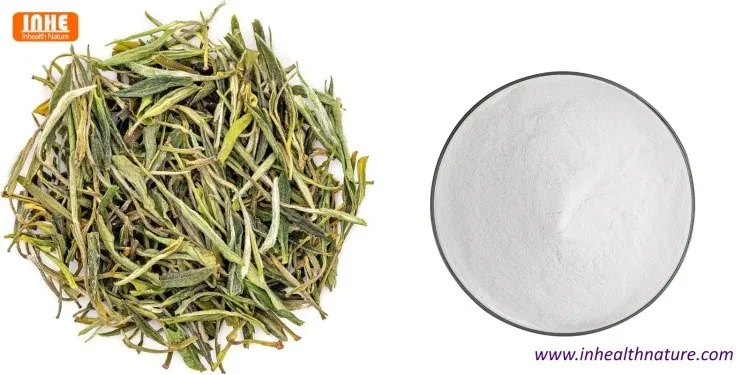
EGCG Powder is a standardized botanical ingredient where Epigallocatechin Gallate (EGCG), the most abundant and biologically active catechin in green tea, is isolated and concentrated. While regular green tea extract typically contains 15-40% total catechins (including EGCG, EGC, ECG, and EC), high-quality EGCG powder typically contains 50-98% pure EGCG.
Key differences for B2B buyers:
a. Potency: 1 g of 90% EGCG powder equals the catechin content of approximately 15-20 cups of green tea.
b. Consistency: Batch-to-batch standardization ensures precise dosing in supplements.
c. Purity: Selective concentration removes non-catechin components (fibers, sugars) and most caffeine. Remaining co-compounds are typically other catechins (EGC, ECG), not impurities.
d. Application note: For dietary supplements (capsules/tablets), 90-98% EGCG is preferred where a clean label and minimal excipient interference matter. For functional foods/beverages, 50-80% EGCG is more common due to better taste and stability.
What defines a premium EGCG ingredient?
Before integrating EGCG into any formulations, formulators must understand three key aspects for specification:
1. Purity & Standardization: Standard EGCG powders range from 50% to 98% purity. High-purity EGCG (≥90%) is preferred for capsules and tablets where dosage precision and minimal excipient interference matter. Lower purity (50-80%) retains minor catechins (ECG, EGC), which may confer synergistic effects but typically contain higher residual caffeine and can affect beverage color and taste.
2. Caffeine Content: EGCG extracts can be either caffeinated (natural profile, often 5-10% caffeine) or decaffeinated (≤1% caffeine, often ≤0.5%). Decaffeinated versions are recommended for nighttime supplements, children's products, and many functional beverages, though regulatory requirements vary by country.
3. Solvent Residue & Heavy Metals: A premium manufacturer like Inhealth Nature provides solvent-free (water or ethanol extraction only) and third-party tests for heavy metals (Pb, As, Cd, Hg) and microbiology (total plate count, yeast & molds, E. coli, and others) to comply with USP, EP, and China GB standards.
What is the difference between decaffeinated and naturally caffeinated EGCG powder?
The choice between decaffeinated and naturally caffeinated EGCG Powder depends on your target market, product positioning, and regulatory considerations.
Naturally Caffeinated EGCG (Caffeine 5-10%):
a. Best for: Weight management supplements, daytime energy products, and pre-workout formulas
b. Advantage: Synergistic thermogenic effect (caffeine + EGCG increases metabolic rate more than either alone)
c. Disadvantage: Cannot be used in evening products, children's supplements, or caffeine-sensitive populations
d. Regulatory note: May require caffeine content declaration or advisory statements (e.g., "not recommended for children/pregnant women") depending on the market. Always verify local regulations.
Decaffeinated EGCG (Caffeine ≤1%, typically ≤0.5%):
a. Best for: Anti-aging supplements, sleep support, antioxidant-only products, pet supplements, and cosmetics
b. Advantage: No stimulant effects, can often be labeled "decaffeinated" or "caffeine-free" in many jurisdictions (verify local thresholds, e.g., EU requires ≤0.2% for "decaffeinated" claims), suitable for a broader population
c. Disadvantage: Slightly higher cost due to additional processing step (CO₂ or water-based decaffeination)
d. Regulatory note: No mandatory caffeine warning label in most markets, but always check local rules for "decaffeinated" claims.
Inhealth Nature offering: Both versions are available in all purity grades (50-98%). Decaffeination is achieved using supercritical CO₂, with no chemical solvent residues.
How should I formulate EGCG into dietary supplement formulations?
We can consider this matter from the following two aspects:
A. For dietary supplements and nutraceuticals, capsules and tablets are the most common applications. For capsules/tablets, 90-98% EGCG is preferred for dosage precision and minimal excipient interference. Caffeinated versions suit weight management and energy formulas; decaffeinated suits cognitive blends or evening use. The typical dosage is 150-300 mg EGCG per serving (standardized to EGCG, not total extract).
a. Regulatory safety note: EFSA has noted that supplemental EGCG intake ≥800 mg/day is associated with increased risk of liver enzyme elevations. Many brands, therefore, adopt a conservative limit of ≤300 mg EGCG per serving. Always refer to local regulatory guidance.
b. Excipient compatibility: Microcrystalline cellulose, silicon dioxide (≤1%), and magnesium stearate (≤0.5%) work well. Avoid basic excipients like bicarbonates or carbonates, as EGCG degrades rapidly above pH 7.5.
c. Stability considerations: EGCG is moisture- and light-sensitive. Use HPMC capsules (not gelatin, which absorbs moisture and becomes brittle in high-humidity markets) and include desiccant canisters in bulk packaging. Use opaque bottles or blister packs to protect from light.
B. For nutraceutical blends (thermogenics, antioxidants): Synergistic ingredients include quercetin (increases bioavailability by inhibiting COMT), black pepper extract (piperine) (enhances absorption), and vitamin C (stabilizes EGCG in solution and prevents oxidation). Do not co-formulate with high doses of iron or copper salts (e.g., ferrous sulfate) in the same capsule, as the metal ions chelate EGCG, drastically reducing efficacy. If iron is needed in the same product, consider separate capsules or advise taking them at least 2 hours apart.
How do I overcome bitterness, astringency, and color instability when adding EGCG to functional foods and beverages?
Adding EGCG to foods and beverages is challenging due to its inherent bitterness, astringency, and pH-dependent color shifts.
A. For ready-to-drink (RTD) beverages: At neutral pH (6.5-7.5) under ambient conditions with oxygen exposure, EGCG oxidizes and turns from pale yellow to brown within days to weeks. At acidic pH (2.5-4.0), EGCG remains chemically stable (>90% retention) but tastes more bitter. However, bitterness can be effectively masked with sweeteners, flavor systems, or cyclodextrin encapsulation.
Recommended solutions:
a. Encapsulated or complexed EGCG: Cyclodextrin encapsulation masks bitterness and improves clarity; lecithin or gum arabic reduces astringency.
b. pH control: Target pH 3.0-4.5 using citric or malic acid buffer. In a properly formulated acidic RTD beverage (with antioxidant preservatives and minimal headspace), EGCG retains >90% potency for up to 12 months at ambient temperature.
c. Recommended purity: 50-70% EGCG (not 98%), lower purity contains other tea catechins that buffer bitterness, provide a more rounded tea flavor, and reduce precipitation.
d. Typical use level: 0.05-0.2% w/v (equals 50-200 mg EGCG per 250 mL serving).
B. For functional bars and snacks: Moisture migration from binders (syrups, dates) causes EGCG degradation and a "green tea off-note." Apply EGCG powder as a surface coating (dusting onto chocolate or yogurt coatings) rather than integrating into dough. For baked bars, use heat-stable microencapsulated EGCG (survives 180°C for 10 minutes). Maximum load is ≤1% of total dough weight; higher levels produce a gritty mouthfeel.
C. For dairy and plant-based alternatives: EGCG binds to milk proteins (casein), forming insoluble complexes that settle as sediment, which can significantly reduce bioavailability (studies report 30-50% reduction). Use low-protein plant-based milks (almond, oat, coconut) with lower protein-binding affinity. If using soy milk, note that soy protein still binds EGCG, though less extensively than casein. Alternatively, add EGCG only to the clear water-based phase in a two-phase product.
How do I formulate a stable, non-discoloring cosmetic product with EGCG for anti-aging and anti-acne benefits?
EGCG offers exceptional topical benefits. It scavenges UV-induced ROS, inhibits MMP-1 (collagenase), and reduces sebum oxidation. However, its instability in aqueous cosmetic bases is not ideal.
Stable formulation conditions for serums, toners, and creams:
a. pH range: 4.0-5.5 (skin-friendly and chemically stable)
b. Water activity: Reducing free water with humectants (glycerin, propanediol) helps control microbial growth and may slightly improve stability, but oxidation is the primary degradation pathway, not hydrolysis.
c. Preservation: Use phenoxyethanol or potassium sorbate. Avoid ethoxylated surfactants (e.g., polysorbates, PEG compounds) that may contain trace peroxides, which rapidly oxidize EGCG. Parabens are generally compatible at pH 4-5.5.
d. Color stability: EGCG solutions start pale yellow and turn yellow-brown to brown upon oxidation. Add EDTA disodium (0.05-0.1%) to chelate pro-oxidant metals, and consider a low concentration of sodium metabisulfite (0.05-0.2%) as an antioxidant. Note: Sodium metabisulfite at >0.2% may cause skin irritation in sensitive individuals; conduct safety testing. Alternative antioxidants: sodium erythorbate or tocopherol.
Recommended use levels by product type:
a. Anti-aging/mature skin serum: 0.5-2.0% EGCG load. Use decaffeinated grade with heavy metals within regulatory limits (e.g., Pb ≤10 ppm, As ≤2 ppm, Hg ≤1 ppm; confirm local requirements). Note: "Anti-aging" claims are restricted in some markets (EU, Canada, China); consult local regulations.
b. Eye cream (for puffiness): 0.3-1.0% EGCG load. Combine with caffeine for synergy.
c. Acne spot treatment: 1.0-3.0% EGCG load. High purity (≥90%) is preferred.
d. Cleansers (rinse-off): 0.1-0.5% EGCG load. Efficacy is limited due to short contact time; this is mainly a marketing claim.
How does particle size affect the performance of EGCG powder in different applications?
Particle size directly impacts dissolution rate, blend uniformity, mouthfeel, bioavailability, and processability.
A. Recommended particle size by application:
a. Capsules and tablets: 100-200 µm, provide optimal flowability and compression. Powders ≤100 µm may cause poor flow, sticking, and electrostatic clumping without glidant addition.
b. Instant powder mixes: ≤75 µm, enabling faster dissolution. Use anti-caking agents (e.g., silicon dioxide) to prevent clumping.
c. Beverages (clear): ≤30 µm (micronized), minimizes sedimentation and maintains a clear appearance. For complete suspension stability, consider ≤20 µm with a suitable suspending agent (e.g., gellan gum, cellulose gum).
d. Cosmetics (serums and creams): ≤20 µm (fine micronized) for smooth, non-gritty texture. ≤10 µm is preferred for high-end serums and eye contour products.
e. Chewables and gummies: ≤150 µm, avoids gritty mouthfeel at lower cost; ≤100 µm is acceptable but may increase processing costs.
B. Bioavailability impact: Reducing particle size from 100 µm to ≤20 µm can increase EGCG's dissolution rate and oral bioavailability by approximately 2-3 fold, though this benefit is most significant under fasted conditions or in low-fat formulations.
C. Note on micronized powders (≤50 µm): While offering faster dissolution and improved bioavailability, they are more prone to electrostatic clumping, moisture absorption, and may require special handling (e.g., glidant addition, humidity-controlled environment, or agglomerated grades).
D. Inhealth Nature offering: We provide standard (100-200 µm) and micronized (≤30 µm) grades, with custom particle size reduction available for large-volume orders. Fine micronized (≤20 µm) available for premium cosmetic applications.
Can EGCG be combined with other botanical extracts in the same formulations?
Yes, EGCG is often combined with other tea extracts and botanicals, but compatibility must be verified.
Good combinations:
a. Matcha powder: Adds umami flavor and a broader catechin profile. Note: Matcha contains insoluble fibers and chlorophyll, which may cause sedimentation in beverages or grittiness in cosmetics. Use only in opaque or suspended formulations.
b. White tea extract: Offers a milder catechin profile and lower caffeine, but provides little synergistic benefit beyond EGCG alone. Consider using alone for simpler formulations.
c. Hibiscus: High in vitamin C (stabilizes EGCG), tart flavor masks bitterness. Note: Hibiscus imparts a deep red/purple color; not suitable for clear or light-colored products.
d. Turmeric/curcumin: Both are antioxidants with potential additive effects, but both are also oxidation-sensitive. Ensure adequate antioxidant protection (e.g., vitamin C, mixed tocopherols) when combining.
e. Quercetin or piperine (black pepper extract): Increases EGCG bioavailability by inhibiting COMT or enhancing gut absorption. Caution: Piperine may increase absorption of certain drugs; check for interactions.
f. Vitamin C (ascorbic acid): Stabilizes EGCG in solution and prevents oxidation. Recommended for liquid formulations.
Cautionary combinations:
a. High-tannin botanicals (e.g., grape seed extract, pomegranate, green tea itself): Tannins may compete for absorption via shared transport mechanisms. Recommend separating intake by at least 2 hours when combined in the same product, or formulating them as different delivery forms.
b. Stimulant herbs (guarana, yerba mate, coffee extract): Combined caffeine content may exceed 100-200 mg per serving, depending on ratios. Ensure the total caffeine per serving is clearly labeled and complies with local regulatory guidelines (e.g., China: ≤400 mg/day for healthy adults; EU: warning above 150 mg/serving).
What certifications can Inhealth Nature offer?
Certifications validate quality, safety, and market access. Inhealth Nature provides the following for EGCG Powder:
1. Kosher: Required for products sold in Jewish-majority markets or demanded by retailers, and increasingly requested by retailers worldwide for broader consumer appeal.
2. Halal: Required for Muslim-majority countries and growing segments worldwide.
3. ISO 22000 / FSSC22000 / cGMP: Manufacturing quality system certifications ensuring food safety and good manufacturing practices.
B2B note: Certifications reduce your regulatory burden and facilitate market entry. We provide full certification documentation with each shipment.
How long does shipping take for different order sizes?
Shipping timelines and documentation vary by order size and destination. Inhealth Nature provides full logistics support for all B2B shipments.
A. Typical lead times (from order confirmation):
a. Sample orders (100 g-1 kg): 3-5 business days via air courier (DHL, FedEx, or based on the requirement of B2B buyers)
b. Trial batches (1-10 kg): 7-10 business days via air courier
c. Commercial bulk (25-100 kg): 10-15 business days by air freight, or 25-35 days by sea freight
d. Container orders (500 kg+): 15-20 business days for production, plus 30-40 days sea freight
B. Documentation provided with every shipment:
a. Certificate of Analysis (COA) with HPLC chromatogram
b. Specification sheet
c. Material Safety Data Sheet (MSDS)
d. Allergen and GMO statement
e. Kosher / Halal / cGMP certificates
f. Packing list and commercial invoice
g. Bill of lading (sea freight) or air waybill
C. Additional documents available upon request: Phytosanitary certificate, origin certificate, and third-party test reports.
Does Inhealth Nature provide formulation troubleshooting support after purchase?
Yes. Technical support does not end with delivery. Inhealth Nature offers post-purchase formulation support, including:
a. Stability troubleshooting: If your finished product shows unexpected color change, precipitation, or potency loss, we will analyze the root cause at no charge.
b. Scale-up assistance: Transition from lab-scale to pilot batch to full production, we advise on mixing parameters, temperature control, and packaging.
c. Regulatory updates: We notify buyers of changes in global EGCG limits (EFSA, FDA, Health Canada) that affect your product labels.
d. Re-formulation support: If you need to change purity grade or switch to decaffeinated EGCG, we provide reformulation guidance.
e. How to access: Contact Inhealth Nature at shaw@inhealthnature.com. Most technical support is included free of charge for active B2B customers.
Ready to formulate with confidence? Request your free sample of Green Tea Extract EGCG Powder or technical consultation today. Email shaw@inhealthnature.com with your product concept.
References
1. EFSA Panel on Food Additives and Nutrient Sources added to Food (ANS), Younes, M., Aggett, P., et al. (2018). Scientific opinion on the safety of green tea catechins. EFSA Journal, *16*(4), e05239.
2. Mehmood, S., Maqsood, M., Mahtab, N., et al. (2022). Epigallocatechin gallate: Phytochemistry, bioavailability, utilization challenges, and strategies. Journal of Food Biochemistry, *46*(6), e14144.
3. Niu, L., Luo, Y., Xie, W., Wang, C., & Liu, Z. (2026). Dietary (−)-Epigallocatechin Gallate (EGCG): State-of-the-art advances in bioactivities, bioavailability enhancement strategies, and applications in nutrition and health. Nutrients, *18*(2), 317.
4. Lai, W. F., Baig, M. M. F. A., Wong, W. T., & Zhu, B. T. (2020). Epigallocatechin-3-gallate in functional food development: From concept to reality. Trends in Food Science & Technology, *102*, 271-279.
5. Lee, M. J., Maliakal, P., Chen, L., et al. (2002). Pharmacokinetics of tea catechins after ingestion of green tea and (-)-epigallocatechin-3-gallate by humans: Formation of different metabolites and individual variability. Cancer Epidemiology, Biomarkers & Prevention, *11*(10), 1025-1032.
6. Śladowska, K., Moćko, P., Brzostek, T., et al. (2025). Efficacy and safety of epigallocatechin gallate in the treatment and prevention of dermatitis: A systematic review. Biomedicines, *13*(6), 1458.
7. Health Canada. (2019). Monograph: Green tea extract (Camellia sinensis) – Oral dosage form. Natural and Non-prescription Health Products Directorate.


