

What certifications should I look for when buying Gromwell Root CO2 Extract?
Nov 18, 2026
When evaluating a Gromwell Root CO2 Extract supplier, the certificate list on their website often gets read too quickly. A cGMP logo is taken as proof of purity. A Kosher symbol is taken as proof of quality. An FSSC 22000 mark is taken as proof that the supplier is "serious." None of these readings is entirely wrong, but none is precise either. The five certificates that matter most in this category-ISO 22000, FSSC 22000, cGMP, Kosher, and Halal-each answer a different question. The sections below separate those questions so you can match them to your own application.
ISO 22000: the foundational food safety management system
ISO 22000 is the international standard for food safety management systems. It requires an organization to establish, implement, and maintain a system that incorporates HACCP principles, prerequisite programs, and interactive communication across the food chain. For a CO2 extract supplier, ISO 22000 certification indicates that the facility has been audited against a documented, auditable framework for identifying food safety hazards and controlling them at critical points.
What it does not mean: ISO 22000 is generic by design. It applies to any organization in the food chain, from farms to retailers, and its requirements are deliberately broad enough to accommodate that range. A supplier holding only ISO 22000 has a functioning food safety system, but the certificate itself does not tell you whether that system is assessed against the more demanding standards major buyers now expect.
FSSC22000: ISO 22000 plus the parts that matter for manufacturing
FSSC 22000 is not a competing standard to ISO 22000-it is built on top of it. The FSSC 22000 certification program incorporates ISO 22000, adds sector-specific prerequisite program specifications (for food manufacturing, ISO 22002-1:2025), and layers on additional requirements including allergen management, food defense, food fraud mitigation, and environmental monitoring. Critically, FSSC 22000 is recognized by the Global Food Safety Initiative (GFSI), which many retailers and multinational manufacturers require as a condition of doing business.
The practical distinction for buyers: a supplier with ISO 22000 alone has a food safety management system. A supplier with FSSC 22000 has that same system, as well as third-party accreditation against a GFSI-approved scheme and the manufacturing-specific prerequisite controls that ISO 22000 leaves to the organization to define. For a CO2 extract intended for supplement or functional food applications, FSSC 22000 is the more informative certificate because it confirms the supplier has been assessed against manufacturing-sector expectations, not just generic food chain requirements.
cGMP: what happens batch to batch
For dietary supplement ingredients in the U.S. market, current Good Manufacturing Practice under 21 CFR Part 111 governs how the material is produced, tested, and documented. The "current" in cGMP is not decorative. It signals an ongoing obligation: written procedures, qualified quality control personnel, established specifications for identity, purity, strength, and composition, and batch production records that allow traceability from raw material receipt through finished product release.
Where cGMP fits relative to the food safety schemes: ISO 22000 and FSSC 22000 address food safety hazards. cGMP addresses something narrower but equally important for extract buyers: whether the shikonin content stated on the specification is actually present in the drum you receive, and whether the supplier can prove it batch by batch. A cGMP-compliant facility is required to maintain the documentation chain that makes a certificate of analysis meaningful.
Buyer's note: cGMP is not a "certificate" in the same sense as ISO or FSSC. FDA does not issue cGMP certificates. When a supplier claims cGMP compliance, ask for evidence of how that compliance has been assessed, rather than relying solely on a supplier-generated document.
Kosher and halal: Market access, not quality signals
These two certifications are often grouped with quality credentials, but they function differently. Kosher certification verifies that ingredients, derivatives, processing aids, and equipment are free of non-kosher substances, with supervision by a recognized kosher certification agency under rabbinical authority. For a botanical extract like Gromwell Root CO2 Extract, the relevant kosher concerns are typically processing aids and equipment shared with animal-derived materials-not the plant itself. Halal certification serves a similar function for Muslim consumers. For plant-derived extracts processed without animal-derived aids or alcohol carriers, the halal compliance pathway is generally more straightforward than for animal-tissue or ethanol-extracted materials, though equipment separation and processing-aid sourcing still require documentation.
What Kosher and Halal tell a buyer: these certificates confirm access to specific consumer markets. They are not guarantees of purity, potency, or manufacturing quality. A supplier can hold both and still ship a batch that fails heavy metal specifications. They belong in your supplier evaluation as market-access requirements, not as substitutes for the COA.
Why the COA still matters more than any certificates
Every certificate discussed above operates at the system level. The COA is the only document that tells you what is in the specific lot you are purchasing. For Gromwell Root CO2 Extract, a credible COA should state shikonin content by a validated method, heavy metals against a stated limit, pesticide residues, microbial limits, and a batch number traceable to the certificate's scope.
Which certificates matter for your situation
The five certificates do not carry equal weight for every buyer. Match the list below to your application and check whether the supplier's certificate set covers the entries that apply to you.
A. You sell into the U.S. dietary supplement market.
cGMP under 21 CFR Part 111 is the operative requirement. Without batch records and specification documentation, a COA is not backed by a traceable production system. Ask for documented evidence of cGMP compliance-such as the most recent inspection outcome the supplier is able to share-and cross-check it against any third-party audit the supplier holds, rather than relying solely on a supplier-generated certificate.
B. You supply retailers or multinational manufacturers that require GFSI-approved schemes.
FSSC 22000 is the certificate they will ask for. ISO 22000 alone will not clear that gate. If your customer's supplier survey lists GFSI recognition as a line item, FSSC 22000 is the relevant answer.
C. You are building a foundational food safety file for a new botanical ingredient.
ISO 22000 provides the HACCP-based framework, but treat it as a baseline rather than a competitive advantage. It tells you the supplier has a system; it does not tell you the system has been assessed against manufacturing-sector prerequisites.
D. Your finished product carries a kosher or halal claim.
Kosher and Halal certificates determine eligibility, not quality. A supplier can hold both and still ship a batch that fails heavy metal limits-these certificates belong in the market-access category of your evaluation sheet, not the quality category.
E. You are comparing two suppliers that both hold the full set.
At that point, the certificates stop distinguishing them. The COA and the batch-specific documentation become the deciding evidence.
Other CO2 Extracts we supply
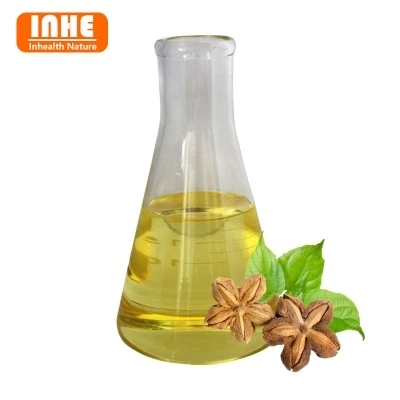
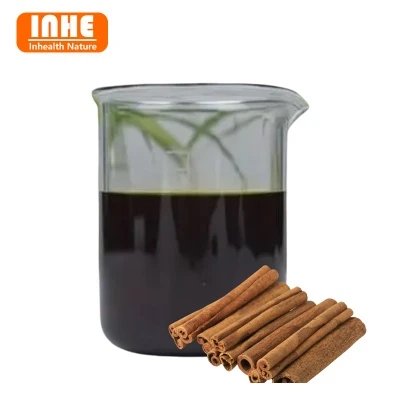
We also offer Sacha Inchi Seed Oil, Cinnamon Bark Oil, Peony Seed Oil, and Borage Seed Oil, each available with the relevant documentation. For reference: sacha inchi oil has been characterized at approximately 44% α-linolenic acid in a published authentication study. The other three are supplied against agreed specifications, and their COAs state the relevant marker compounds for each material.
conclusion
ISO 22000 tells you the supplier has a food safety system. FSSC 22000 tells you that system has been assessed against manufacturing-sector and GFSI-recognized requirements. cGMP tells you the batch documentation and specification controls are in place. Kosher and Halal tell you the material can reach specific markets. None of them tells you what is in the drum. That is the COA's job.
If you are evaluating Gromwell Root CO2 Extract or any of our other botanical CO2 extracts, we are happy to share the certificates listed above together with a batch-specific COA for the lot you are considering. Send your specification requirements and target application to info@inhealthnature.com, and we will respond with the relevant documentation and a quotation.
References
[1] Kourounakis AP, et al. Alkannin and shikonin: effect on free radical processes and on inflammation-a preliminary pharmacochemical investigation. Arch Pharm (Weinheim). 2002;335(6):262-266. doi: 10.1002/1521-4184(200208)335:6<262::AID-ARDP262>3.0.CO;2-Y. PMID: 12210768.
[2] Ishida T, et al. Protection of human keratinocytes from UVB-induced inflammation using root extract of Lithospermum erythrorhizon. Biol Pharm Bull. 2007;30(5):928-934. doi: 10.1248/bpb.30.928. PMID: 17473437.
[3] Maurer NE, et al. Characterization and authentication of a novel vegetable source of omega-3 fatty acids, sacha inchi (Plukenetia volubilis L.) oil. Food Chem. 2012;134(2):1173-1180. doi: 10.1016/j.foodchem.2012.02.143. PMID: 23107745.
[4] FSSC 22000 Scheme Version 7. Foundation FSSC. 2026. Available from: https://www.fssc.com/fssc-22000/scheme-documents/.
[5] Current Good Manufacturing Practice in Manufacturing, Packaging, Labeling, or Holding Operations for Dietary Supplements, 21 CFR Part 111. U.S. Food and Drug Administration.