

What is the taste of Maca Extract Powder?
Nov 09, 2026
If you've worked with Maca Extract Powder, you already know the question that comes up in every formulation meeting: why does one batch taste nutty and another taste like bitter soil? As a supplier, we've handled this question for years; I can tell you maca's taste isn't random-it reflects root chemistry, processing control, and extraction quality.
This post breaks down what drives maca extract flavor, how debittering technologies work without relying on heavy sweeteners, and how to evaluate a sample before you commit to a batch.
Why maca extract taste varies
A. The primary bitter principle is well established.
Benzyl glucosinolate (glucotropaeolin) is the compound responsible for the pungent, bitter, and astringent notes in maca. It is also the dominant glucosinolate in the root, accounting for roughly 80-90% of total glucosinolates-which is why debittering efforts focus on this single molecule rather than a broad spectrum of bitter compounds.
B. Color type influences secondary metabolite profiles, but not in a simple "black is mild" way.
A controlled study in the Peruvian Andes found that hypocotyl color significantly affected most secondary metabolites, with yellow/lead-colored types rich in glucosinolates, violet types rich in macaene, and darker types associated with macamides. This means color can be a rough indicator of glucosinolate load, but sensory outcomes still depend on processing and extraction. Avoid assuming that a given color automatically delivers a milder or harsher taste-request batch-specific data.
C. Geography matters for actives.
Research has shown that geographical origin, rather than ecotype, plays a more significant role in macamide accumulation. For formulators, this means maca sourced from different regions can vary in both active content and flavor precursor levels-a reason to demand origin documentation, not just color claims.
D. Extract concentration amplifies whatever is there.
A concentrated extract removes much of the insoluble fiber responsible for the rough mouthfeel of root powder, but it also concentrates the glucosinolates. A well-processed extract should taste intense-but not carry a heavier off-note load than root powder at equivalent flavor intensity.
Debittering technology without overloading sweeteners
A. Targeted taste modulation is the cleaner route.
The bitterness of maca extract stems from benzyl glucosinolate, and the most practical debittering approaches work by modulating that specific bitter compound rather than masking it under sweetener load. Published technical literature describes combining the glucosinolate-containing material with sugar alcohols, edible acids, or low-sweetness monosaccharides/disaccharides at functional ratios to improve taste.
B. The key distinction:
These are low-sweetness taste modulators, not high-intensity masking agents. The published range is 0.1 to 0.7 times the sweetness of sucrose-enough to soften the pungent, bitter, and astringent notes without turning the extract into a candy-flavored product. This is the difference between debittering and masking-one preserves the botanical character, the other hides it.
C. What this means for formulators:
a. If your extract requires heavy sweetener loading to be palatable, the problem is likely the extract quality, not the application.
b. A well-debittered extract should still read as earthy and mildly nutty-not metallic, sharply bitter, or chemically masked.
c. Ask suppliers whether they use low-sweetness taste modulators at the extraction or blending stage, and at what ratio.
D. On processing temperature and glucosinolate degradation:
Glucosinolates are known to break down under certain conditions, and published data suggest that drying temperature can significantly affect the bitterness of maca extracts, with the effect linked to glucosinolate hydrolysis products rather than intact glucosinolates. However, the specific relationship between extraction temperature and sensory bitterness is not well characterized in the published literature available to us. Treat "low-temperature processing preserves flavor" as a reasonable supplier claim to verify with samples, not as an established scientific fact.
How to evaluate a maca extract sample
Do a simple sensory check before scaling.
Step 1. Disperse 100 mg of extract in 30 mL plain almond milk or water. Do not taste dry-concentration makes even good extract harsh straight.
Step 2. Note the finish. A clean extract finishes earthy and mildly nutty. A poorly processed extract leaves a lingering bitter or metallic note.
Step 3. Ask for glucosinolate and macamide data separately. Macamides and macaenes are validated marker compounds for maca identity and quality, but do not assume that higher macamide content automatically means better taste. Use the data to confirm identity and potency, and use sensory testing to judge flavor.
Ingredient pairings that work
Maca extract works best when the pairing makes sense on both flavor and function.
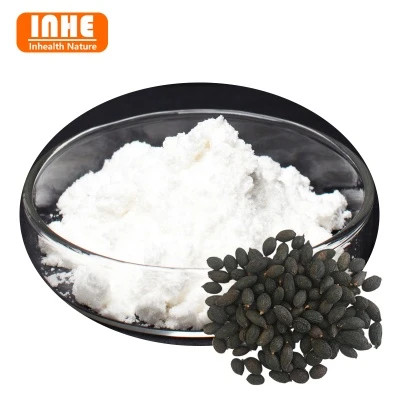
Saw Palmetto Berry Extract Powder. This is the best supported pairing for men's health formulas. A 2024 in vitro study specifically examined the combination of red maca and saw palmetto extract for prostate-related outcomes, making it one of the few maca combinations with direct published research. On the flavor side, saw palmetto's mild, fatty-berry profile sits alongside maca's earthiness without clashing.
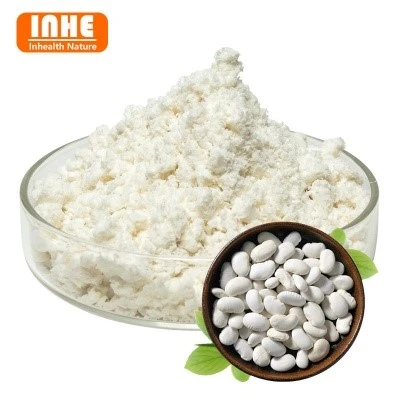
White Kidney Bean Extract Powder. This pairing is functional rather than flavor-driven. White kidney bean extract has a relatively neutral, starchy profile that does not compete with maca's flavor in capsule or stick-pack formats. It works best in weight-management blends where maca is already used at a low enough level that flavor is not the limiting factor.
What a good maca extract should taste like
It should taste: earthy, mildly nutty, with a clean finish and no lingering bitterness.
It should not taste: sharply bitter, metallic, or so heavily masked that the botanical character disappears.
The practical test is simple: if the sample from Step 1 leaves you unwilling to finish the glass, the extract is not ready for a consumer product-regardless of what the COA says.
Ready to test our maca extract in your formula? Request a sample and spec sheet at info@inhealthnature.com.
References
[1] Ganzera, M., Zhao, J., Muhammad, I., & Khan, I. A. (2002). Chemical profiling and standardization of Lepidium meyenii (Maca) by reversed-phase high-performance liquid chromatography. Chemical and Pharmaceutical Bulletin, 50(7), 988–991.
[2] Clément, C., Díaz Grados, D. A., Avula, B., Khan, I. A., Mayer, A. C., Ponce Aguirre, D. D., Manrique, I., & Kreuzer, M. (2010). Influence of colour type and previous cultivation on secondary metabolites in hypocotyls and leaves of maca (Lepidium meyenii Walpers). Journal of the Science of Food and Agriculture, 90(5), 861–869.
[3] Chen, S.-X., Li, K.-K., Pubu, D., Jiang, S.-P., Chen, B., Chen, L.-R., Yang, Z., Ma, C., & Gong, X.-J. (2017). Optimization of ultrasound-assisted extraction, HPLC and UHPLC-ESI-Q-TOF-MS/MS analysis of main macamides and macaenes from maca (cultivars of Lepidium meyenii Walp). Molecules, 22(12), 2196.
[4] Gaweł-Bęben, K., Kukula-Koch, W., Szwajgier, D., Antosiewicz-Klimczak, B., Orihuela-Campos, R. C., Głowniak, K., & Meissner, H. O. (2024). Synergism of specific maca phenotypes (Lepidium peruvianum) in combination with saw palmetto (Serenoa repens) extract for chemoprevention of prostate cancer as determined in in vitro cytotoxicity assays on human epithelial and prostate cancer cells. Molecules, 29(23), 5632.