

How reliable are the sources selling Ultramicronized Palmitoylethanolamide?
Nov 27, 2026
Ultramicronized Palmitoylethanolamide is becoming an increasingly discussed ingredient in the global nutrition and functional supplement market. For brand owners, contract manufacturers, distributors, and R&D teams, the real question is not only whether PEA is interesting as an ingredient, but whether the supplier can deliver consistent quality, documented safety, and regulatory support at commercial scale.
As a supplier of Ultramicronized Palmitoylethanolamide, we often speak with buyers who are comparing multiple sources. This article explains how to qualify a supplier from a B2B perspective: documentation, particle-size control, testing, compliance, traceability, commercial reliability, and technical support.
What is ultramicronized palmitoylethanolamide?
Palmitoylethanolamide, commonly known as PEA, is an endogenous fatty acid amide. It has been studied for its potential role in inflammation modulation, pain-related pathways, and neuroprotective mechanisms, although these areas remain research-focused and should not be presented as guaranteed health outcomes in finished-product marketing.
"Ultramicronized" refers to a processed powder form with a significantly reduced and controlled particle size distribution. In practice, the ultramicronized grade is defined by a significantly reduced particle-size distribution of 0.8-6 μm (Frontiers Pharmacol. 2018;9:249), compared with naïve PEA at 100-2000 μm. In ingredient sourcing, this matters because particle size can influence powder flowability, dispersibility, uniformity in blending, and potentially absorption behavior. The credible position is that particle-size reduction is expected to improve dissolution rate; to date, human head-to-head pharmacokinetic data between ultramicronized and naïve PEA remain limited, so a fixed "X-fold bioavailability" claim is not supportable from public literature. Buyers should not accept the term "ultramicronized" as a marketing label alone. A credible supplier should be able to provide particle-size data, such as D10, D50, D90, or laser diffraction results, rather than only using the word "ultramicronized" on a specification sheet.
Key criteria for qualifying an ultramicronized PEA supplier
1. Batch-Level Quality Control
A reliable supplier should provide a batch-specific Certificate of Analysis, or COA, for every commercial lot. The COA should normally include:
a. Appearance and odor
b. Assay or purity
c. Loss on drying
d. Particle size distribution
e. Heavy metals, including lead, arsenic, cadmium, and mercury
f. Microbial limits, including total plate count, yeast and mold, E. coli, Salmonella, and Staphylococcus aureus
g. Residual solvents, where applicable
h. Related impurities or residual starting materials
i. Packaging and storage conditions
For B2B buyers, the COA should be treated as a minimum document, not as complete proof of quality. A stronger supplier will also maintain internal QC records, retain samples, calibration records for testing equipment, and lot traceability from raw material to finished powder.
2. Third-Party Testing and Lab Accreditation
In-house testing provides a necessary foundation, yet third-party verification constitutes an additional layer of assurance. Ask whether third-party testing is performed for identity, purity, heavy metals, microbes, and residual solvents. Where possible, the lab should operate under ISO/IEC 17025 or an equivalent accredited quality system.
A professional supplier should be able to explain which tests are done in-house, which are outsourced, how often they are performed, and whether reports can be shared under NDA for qualified buyers.
3. Manufacturing and Documentation Standards
For international trade, buyers should request the supplier's quality documentation package, which may include:
a. ISO 22000 or equivalent QMS certificate
b. HACCP or food safety documentation, where applicable
c. cGMP statement or manufacturing standard description
d. SDS, TDS, and product specification sheet
e. Allergen statement
f. Non-GMO statement, if relevant and verifiable
g. Gluten-free statement, if applicable
h. Country-of-origin declaration
i. Shelf-life and stability data
j. Packaging compatibility information
In the US market, dietary supplement manufacturing is governed by FDA current Good Manufacturing Practice requirements under 21 CFR Part 111; dietary-ingredient suppliers generally sit under 21 CFR Part 117 food cGMP. FDA compliance is a system of controls, not a certificate that automatically validates every claim - and FDA does not issue "FDA-approved" certificates for supplements. In the EU, food supplement obligations may involve Directive 2002/46/EC, labeling rules, traceability requirements, and novel-food status checks depending on the ingredient status and intended use.
4. Raw Material Traceability
Traceability is one of the most overlooked areas in ingredient sourcing. A reliable Ultramicronized PEA supplier should be able to answer:
a. Where are the raw materials sourced?
b. Are upstream suppliers audited?
c. Can the supplier link finished lot numbers to raw material lots?
d. Are transport, storage, and humidity conditions controlled?
e. Is there a recall procedure and lot-traceback system?
For regulated markets, traceability is not only a quality issue. It is also a commercial risk-management issue. If a finished-goods brand receives a customer complaint or regulatory inquiry, the ingredient supplier must be able to support the investigation quickly.
5. Particle Size and Process Consistency
Because the value proposition of Ultramicronized PEA depends on particle reduction, buyers should ask for process consistency data. Useful questions include:
a. What ultramicronization technology is used?
b. Is the process thermal, mechanical, supercritical, or another method?
c. How is particle agglomeration controlled during storage?
d. Is an anti-caking agent used, and if so, is it declared?
e. What is the typical D50 and D90 range?
f. How stable is particle size across three consecutive batches?
A supplier that cannot discuss particle-size distribution, agglomeration risk, and batch-to-batch variation may be selling "ultramicronized" positioning without enough technical control behind it.
6. Regulatory and Labeling Support
Different markets treat ingredients differently. Before purchase, confirm:
a. Whether PEA is acceptable in the target category: food supplement, dietary supplement, medical food, cosmetic, or other regulated format
b. Whether the intended claims are permitted
c. Whether maximum daily intake guidance exists in the destination market
d. Whether the ingredient has novel-food implications in the EU or similar status issues elsewhere
e. Whether finished-product labels require specific warnings, allergen statements, or dosage disclosures
f. Claim boundary we hold to: structure/function language only ("studied for", "may support", "particle-size-optimized for dissolution"). No "treats neuropathy", "replaces NSAIDs", or "clinically proven superior" - to date, no published RCT has demonstrated clinical superiority of ultramicronized over naïve PEA in man.
A reliable B2B partner should not promise unrestricted claims. Instead, they should provide regulatory documents, claim boundaries, and formulation guidance that help the buyer reduce downstream risk.
7. Commercial Reliability
Quality is only part of supplier evaluation. For real projects, buyers also need operational certainty:
a. Minimum order quantity
b. Lead time
c. Stock availability
d. Packaging options, such as aluminum foil bags, fiber drums, or custom packaging
e. Shelf life and retest policy
f. Incoterms and logistics capability
g. Stability support for capsule, tablet, powder blend, or stick-pack applications
h. OEM/ODM or formulation assistance
A cheap quote is not necessarily a reliable quote. The lowest price may hide weak documentation, inconsistent particle size, poor packaging, or limited after-sales support.
How does our qualification process support B2B buyers?
As an Ultramicronized Palmitoylethanolamide supplier, we approach supplier qualification from the buyer's risk perspective.
Quality Assurance
We provide batch-level COAs covering assay, appearance, loss on drying, particle size, heavy metals, microbiology, residual solvents, and other agreed parameters. Internal QC is supported by third-party testing when required by the customer or destination market.
Documentation Package
Qualified buyers can request the full technical file, including TDS, SDS, specification sheet, allergen statement, non-GMO statement where applicable, country-of-origin information, shelf-life data, and regulatory-support documents.
Process Transparency
Our Ultramicronized PEA production process is documented from raw-material intake to final packaging. Lot traceability, retention samples, and batch records are maintained to support audits, import clearance, and finished-goods investigations.
Regulatory Awareness
We work with customers on market-specific documentation for the US, EU, and other regions. We do not encourage unsupported health claims. Instead, we help buyers align ingredient positioning with applicable supplement regulations and label requirements.
Commercial Support
We support sample requests, pilot batches, scale-up orders, private-label projects, and long-term supply programs. Packaging can be discussed according to warehouse conditions, moisture sensitivity, and buyer handling requirements.
Adjacent ingredients for portfolio development
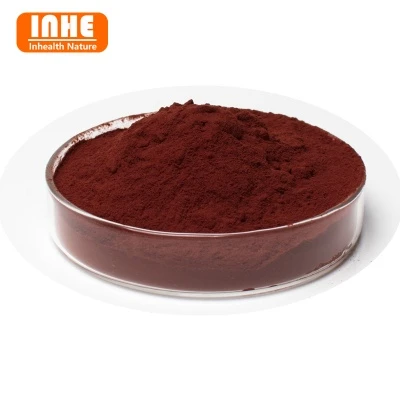
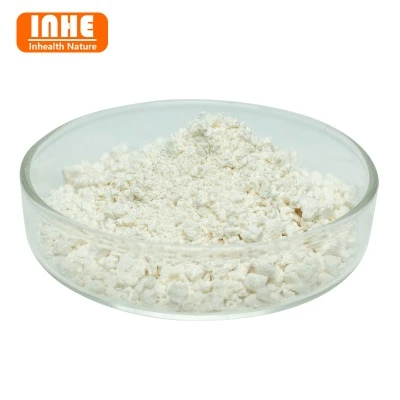
Ultramicronized PEA is often shortlisted alongside PQQ Powder, Plant Sterols Powder, 5-HTP Powder, Cynarin Powder, and Paeonolum / paeony-derived ingredients when brands build differentiated lines. Each is assessed independently - with its own COA, regulatory status, and claim boundary - and references for each ingredient are available on request; these are offered as a portfolio option, not as evidence for PEA itself. Do not choose adjacent ingredients only by trend; choose them by documentation depth, supply stability, interaction with your dosage form, and claim feasibility in your target market.
Practical supplier checklist
Before approving any Ultramicronized PEA source, request the following:
a. Batch-specific COA
b. Full specification sheet
c. SDS and TDS
d. Particle-size distribution report
e. Heavy-metal and microbial test reports
f. Residual-solvent statement
g. Allergen and origin declarations
h. Stability or shelf-life data
i. Manufacturing quality documents
j. Raw-material traceability explanation
k. Regulatory-use guidance for your target market
l. Sample, pilot batch, and commercial supply terms
If a supplier cannot provide these documents clearly, the apparent cost advantage may disappear once compliance, reformulation, import risk, and customer complaints are considered.
FAQ
Q1: Is "ultramicronized" a regulated grade?
A: No. It is a processing descriptor. Ask for D10/D50/D90 laser-diffraction data instead of trusting the word on a spec sheet.
Q2: Does ultramicronization provenly raise human bioavailability?
A: Not in the strict sense. Rodent ¹³C-labelled data show higher plasma and tissue levels for the ultramicronized form; to date, human head-to-head PK data are limited. Treat it as a dissolution-optimization choice, not a guaranteed bioavailability multiplier.
Q3: What claims can I put on a finished supplement label?
A: Structure/function only, per DSHEA-style framing in the US and EU food-supplement rules. No disease treatment, prevention, or cure language.
Q4: Which documents should I get before paying a deposit?
A: Lot COA, particle-size report, SDS/TDS/spec, heavy-metal + microbe + residual-solvent data, allergen/origin, stability summary, and a current ISO/HACCP/FSSC certificate with scope.
conclusion
Selecting a reliable Ultramicronized Palmitoylethanolamide source is not just about buying a powder. It is about reducing formulation risk, protecting finished-goods claims, passing buyer audits, and ensuring consistent supply.
When evaluating Ultramicronized Palmitoylethanolamide for commercial development, prioritize batch documentation, particle-size control, independent testing, traceability, and regulatory support over promotional claims alone. A trustworthy supplier should be transparent, technically prepared, and willing to support your R&D and procurement team beyond the moment of sale.
Ready to evaluate Ultramicronized PEA for your next formulation or private-label project? Contact our technical and sourcing team for the latest COA, TDS, SDS, particle-size report, sample quotation, and regulatory-support package. We welcome OEM/ODM discussions and long-term supply partnerships.
Email: info@inhealthnature.com
References
[1] U.S. Food and Drug Administration. Current Good Manufacturing Practice in Manufacturing, Packaging, Labeling, or Holding Operations for Dietary Supplements, 21 CFR Part 111. eCFR.
[2] U.S. Food and Drug Administration. Current Good Manufacturing Practice, Hazard Analysis, and Risk-Based Preventive Controls for Human Food, 21 CFR Part 117. eCFR.
[3] U.S. Food and Drug Administration. Import Alert 54-14 - Detention Without Physical Examination of Dietary Supplement Products from Firms That Have Not Met Dietary Supplement GMP. FDA AccessData.
[4] European Parliament and Council. Directive 2002/46/EC of 10 June 2002 on the approximation of the laws of the Member States relating to food supplements. OJ L 183, 12.7.2002, p.51–57. EUR-Lex.
[5] Petrosino S, Cordaro M, Verde R, et al. Oral Ultramicronized Palmitoylethanolamide: Plasma and Tissue Levels and Spinal Anti-hyperalgesic Effect. Front Pharmacol. 2018;9:249. doi:10.3389/fphar.2018.00249.
[6] Gabrielsson L, Mattsson S, Fowler CJ. Palmitoylethanolamide for the treatment of pain: pharmacokinetics, safety and efficacy. Br J Clin Pharmacol. 2016;82(4):932–942. doi:10.1111/bcp.13020.
[7] ISO/IEC 17025:2017. General requirements for the competence of testing and calibration laboratories. 3rd ed. International Organization for Standardization; 2017.