

What is the difference between Rose Enzyme and other enzymes?
Aug 31, 2026
As a supplier of Rose Enzyme, I am often asked how it compares to other enzymes on the market. In this article, I'll share a detailed comparison to help you understand what makes Rose Enzyme distinct and whether it fits your product development needs.
Let's start with the basics. Enzymes are proteins that act as catalysts in biological reactions. They speed up these reactions, making all sorts of processes in our bodies and in nature happen more efficiently. There are many different enzymes available, each with its own unique function.
What makes Rose Enzyme special
First off, the source of Rose Enzyme is unique. As the name suggests, it's derived from roses. Beyond their ornamental value, roses contain beneficial compounds such as vitamins, minerals, and polyphenolic antioxidants, which are incorporated into the enzyme during fermentation.
One of the key benefits of Rose Enzyme is its potential to improve skin health. The antioxidants in rose petals help neutralize free radicals-unstable molecules that can damage cells and accelerate skin aging. A 2024 study published in the journal Bioprocess Engineering demonstrated that rose enzyme fermentation significantly enhances superoxide dismutase (SOD) activity and total phenolic content, with a 30-day human trial confirming measurable improvements in skin tone and reduction of hyperpigmentation. When consumed, Rose Enzyme works from the inside out to promote a healthy complexion and diminish the appearance of fine lines and wrinkles.
Another notable aspect is its rich bioactive profile. The fermentation process yields a complex of polyphenols, flavonoids, and organic acids, which have been associated with systemic antioxidant effects. This positions Rose Enzyme as a distinctive ingredient for products targeting overall wellness and internal vitality.
Compares rose enzyme with other enzymes
1. Digestive Enzymes (Amylase, Protease, Lipase)
Digestive enzymes are probably the most well-known category. They help break down food into smaller molecules for better nutrient absorption.
While digestive enzymes focus primarily on the gastrointestinal process, Rose Enzyme takes a more holistic approach. Yes, it can also aid digestion to some extent-fermentation naturally breaks down complex substances-but it goes beyond that by offering additional benefits like skin health support and systemic antioxidant protection.
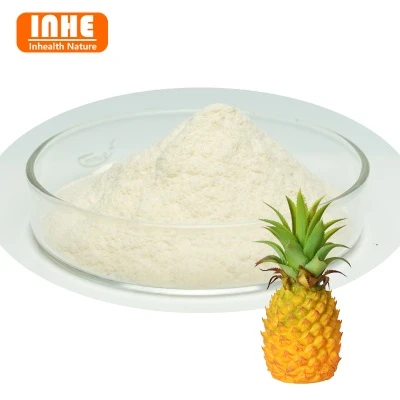
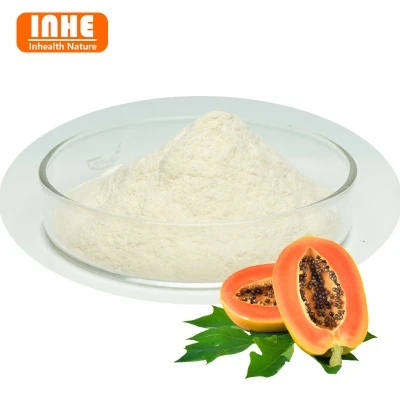
2. Fruit-Derived Proteolytic Enzymes (Bromelain, Papain, Actinidin, and Ficin)
Bromelain, papain, actinidin, and ficin are four of the most recognized plant-derived proteases on the market. Bromelain is extracted from pineapple stems (Ananas comosus), papain from papaya latex (Carica papaya), actinidin from kiwifruit (Actinidia deliciosa), and ficin from fig tree latex (Ficus species). All four are cysteine proteases with a shared primary function: they hydrolyze peptide bonds in proteins, breaking them down into smaller peptides and amino acids.
These enzymes are widely used as digestive aids, meat tenderizers, and in food processing. Pineapple Enzyme Bromelain and Papain Powder have also been studied for their anti-inflammatory and wound-healing properties. Actinidin has been investigated for its ability to enhance protein digestibility and reduce gastrointestinal discomfort, while ficin is valued for its proteolytic activity across a broad pH and temperature range.
However, Rose Enzyme has a distinct flavor and aroma compared to these fruit-derived enzymes. The sweet, floral scent of roses makes it a more pleasant option for those who may find the stronger or more acidic taste of bromelain, papain, actinidin, or ficin less appealing. More importantly, these four fruit-derived enzymes are primarily proteases-their main job is to hydrolyze proteins. Rose Enzyme, by contrast, is a fermentation-derived complex that contains not only enzymes but also a rich matrix of polyphenols, flavonoids, organic acids, and trace amounts of GABA (γ-aminobutyric acid). It is not a single-function protease but a holistic bioactive blend.
In summary, while bromelain, papain, actinidin, and ficin are excellent proteolytic enzymes for protein digestion and anti-inflammatory support, they are single-function proteases. Rose Enzyme offers a broader spectrum of enzymatic activity, antioxidant polyphenols, and skin-supporting flavonoids, making it a uniquely positioned ingredient among plant-based enzyme products.
Production process of rose enzyme
The production of Rose Enzyme is a delicate process. High-quality roses are carefully selected, washed, and prepared for fermentation. According to peer-reviewed research, the process typically involves a multi-strain approach using specific lactic acid bacteria such as Lactobacillus plantarum, Lactobacillus reuteri, and Lactobacillus rhamnosus. Some production methods incorporate a two-stage fermentation-approximately 120 hours in the first stage followed by around 72 hours in the second-resulting in an enzyme-rich product with enhanced SOD activity.
During fermentation, microorganisms break down the rose components, transforming them into bioactive compounds including polyphenols, flavonoids, and organic acids. Studies have shown that SOD activity in rose enzyme can reach 33.2 U/ml or higher, and antioxidant capacity (DPPH· and hydroxyl free radical scavenging rates) correlates positively with both SOD activity and total phenol content.
This slow, natural fermentation process is what gives Rose Enzyme its rich flavor and concentrated beneficial compounds, a profile that distinguishes it from extraction-based plant proteases.
Application guidelines for formulators
For B2B buyers and product developers, practical application parameters are key considerations. Here are general reference points for incorporating Rose Enzyme into finished products:
a. Recommended Dosage: Typical daily intake ranges from 5-10 ml (approximately 1-2 teaspoons) of liquid concentrate, or equivalent powder form. For functional beverages, a common starting point is a 2-5% inclusion rate, adjustable based on target bioactive levels (e.g., the concentrate typically provides SOD activity of ≥30 U/ml; this is a raw-material specification, not a finished-product value). Formulators should conduct their own stability and dosage validation for finished products.
b. Stability: Rose Enzyme remains stable under typical food processing conditions. For best results, avoid prolonged exposure to temperatures above 60°C (140°F) to preserve heat-sensitive bioactives such as SOD and polyphenols. It is compatible with most beverage matrices, including juices, teas, and smoothies, as well as gummy and supplement formulations.
c. Application Scenarios: Ideal for functional drinks (beauty beverages, wellness shots), dietary supplements (liquid vials, sachets, gummies), and formulations where both antioxidant activity and a natural floral sensory profile are desired.
How to use rose enzyme
Using Rose Enzyme is straightforward. It can be mixed with water, juice, or added to smoothies. A typical serving is about one to two teaspoons per day. It can be taken in the morning on an empty stomach or after meals, according to personal preference.
Why choose our rose enzyme
As a supplier, we take great pride in the quality of our Rose Enzyme. We source fresh roses from sustainable farms. Our production process is strictly monitored to preserve beneficial compounds, and we conduct rigorous quality control testing to ensure our product meets the highest standards.
If you are a retailer looking to add a unique product to your shelves, or a brand/formulator interested in incorporating Rose Enzyme into your product line, please feel free to contact us at info@inhealthnature.com. We are happy to discuss pricing, bulk orders, custom specifications, samples, or any other details you may need. We look forward to exploring how we can work together.
References
1. Hui, M. X., Song, H., Yu, P., Min, X. B., Jiao, Y. P., & Zhao, D. (2024). Preparation of rose enzyme and its anti-skin-aging function. Bioprocess Engineering, 22(1), 99-105. DOI: 10.3969/j.issn.1672-3678.2024.01.013
2. Study on Preparation of Rosa rugosa Enzyme by Compound Strains Fermentation Process. (2016). The Food Industry, (10), 64-69.
3. Domokos-Szabolcsy, É., Alshaal, T., Elhawat, N., et al. (2024). Enhanced Oligopeptide and Free Tryptophan Release from Chickpea and Lentil Proteins: A Comparative Study of Enzymatic Modification with Bromelain, Ficin, and Papain. Plants, 13(21), 3100.