

How should Silybin Phospholipids be stored?
Nov 23, 2026
Key Takeaways for Procurement and Formulation:
1. Silybin Phospholipids are a hygroscopic, light-sensitive powder. Storage failures show up as potency loss, not always as visible spoilage.
2. Operating targets: 10-25°C and 30-50% RH, with opaque packaging and desiccants in humid climates.
3. Packaging and dispensing methods matter as much as warehouse conditions-the first opening of a drum is the highest-risk moment.
4. Dispense in a controlled, low-humidity area, minimize open-close cycles, and purge headspace before resealing partially used drums. Label the first-open date to prioritize older stock.
Why does this ingredient need its own storage requirements?
Silybin Phospholipids are a milk thistle flavonolignan complexed with phospholipids (typically phosphatidylcholine from sunflower or soy). Compared with standard milk thistle extract, this complex delivers higher bioavailability. However, the introduction of phospholipid carriers makes it a chemically sensitive powder rather than a shelf-stable bulk extract. Ordinary milk thistle extracts mainly face polyphenol oxidation risks, while silybin phospholipid complexes carry additional instability risks including lipid peroxidation and carrier structure collapse. Three factors account for most potency and quality risks during storage and transportation: light exposure, elevated temperatures, and moisture uptake.
Marketed silybin-phosphatidylcholine ingredients consistently label "store in a cool, dry place, protected from light and moisture". This industry standard procedure supports the practical necessity of strict environmental controls, even where long-term stability data for bulk powder remain limited.
For B2B buyers, the practical implication is straightforward: environmental storage is an integral part of formulation stability. Relying solely on general warehouse routines will overlook the specific protection requirements of this sensitive complex. Therefore, storage conditions must be clearly defined and agreed upon in supplier contracts, rather than being left to routine warehouse management.
Storage & handling
1. Light: Opaque packaging, low-UV transfer
Silybin is a flavonolignan with confirmed light-sensitive behavior. Published photostability work shows that silymarin-related polyphenols-especially 2,3-dehydrosilybin and quercetin-undergo UVA-dose-dependent degradation in aqueous systems, while silybin itself is unstable in solution and benefits from light protection. In phospholipid complexes, light exposure also promotes lipid oxidation, vesicle aggregation, and loss of encapsulation efficiency. Handling rules are as follows:
a. Bulk: food-grade HDPE drums with opaque/black liners.
b. Small lots: amber PET or foil-laminate containers, induction-sealed.
c. No clear bins, clear jars, or window-adjacent shelving.
d. Container-to-container transfer: perform under low-UV/amber or yellow light. Standard fluorescent fixtures can emit measurable 300-400 nm leakage; validate fixture output rather than assuming "room light is safe."
2. Temperature: Controlled cool range; avoid freezing
Dry phytosome powders are generally stable between −20 °C and 30 °C, but the practical handling window for bulk material is narrower.
A. Recommended handling spec
a. Target: 10-25 °C (50-77 °F)
b. Avoid sustained exposure >30 °C (86 °F): accelerates phospholipid peroxidation and silybin degradation.
c. Keep away from water heaters, radiators, ovens, and direct sun.
B. Freezing
a. Freezing is not recommended for finished complex powder unless the material has been freeze-drying-validated.
b. Freeze–thaw cycles may cause:
1) phase separation of the lipid complex
2) vesicle/aggregate rearrangement
3) recrystallization or localized silybin enrichment upon thaw
C. Hot climates (>27 °C)
a. Refrigeration is acceptable.
b. Before opening, allow containers to equilibrate to room temperature inside sealed packaging to prevent condensation and localized moisture uptake.
3. Moisture: RH control is a stability control, not basic environmental maintenance
A. Silybin phospholipid complexes are hygroscopic. Moisture uptake drives:
a. clumping and caking
b. hydrolysis of phospholipid esters
c. accelerated oxidation
d. microbial risk
e. loss of amorphous structure and complex integrity
B. Targets
a. Ambient RH: 30-50% during storage and handling
b. Bulk drums: desiccant packs + moisture-barrier liners
c. Humid regions (Southeast Asia, Gulf Coast, non-climate-controlled warehouses): dehumidified rooms + sealed transfer
C. Why caking is a delayed indicator
In amorphous powder systems, water acts as a plasticizer. As moisture sorbs, the glass transition temperature (Tg) drops. When Tg approaches or falls below storage temperature, the matrix shifts from glassy to rubbery:
a. particle contact points deform
b. viscous bridges form
c. flow decays and caking begins
This molecular mobility also accelerates chemical degradation-so visible clumps mean the instability process is already advanced.
Packaging and cross-contamination control
A. Packaging specifications
a. Bulk drums: hermetic seal, integrity verified before dispatch.
b. Formulation batches: air-tight amber containers; clear bins are prohibited.
c. Finished products: opaque bottles with induction-sealed lids. Transparent hard-shell capsules are not recommended for silybin phospholipid formulations. Capsule shells permit light transmission; given the confirmed light sensitivity of silybin and the oxidation risk of the phospholipid carrier, transparent capsules may accelerate active degradation over prolonged shelf life. Dedicated light-protective capsule formats (opaque or UV-blocking shells) are preferred where capsule delivery is required.
B. Storage segregation and contamination control
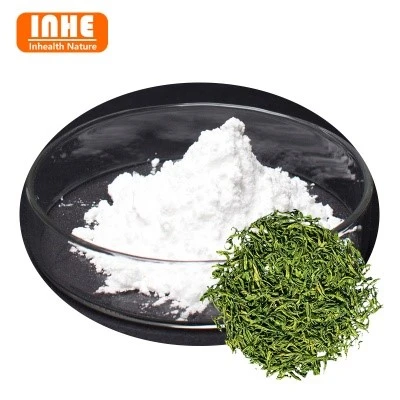
Botanical extracts must not be treated as interchangeable materials. Extracts differ significantly in hygroscopicity and moisture equilibrium behavior. For example, Green Tea Extract EGCG Powder is strongly hygroscopic and prone to caking once exposed to humid ambient air; it requires independent sealed containment and separate condition monitoring.
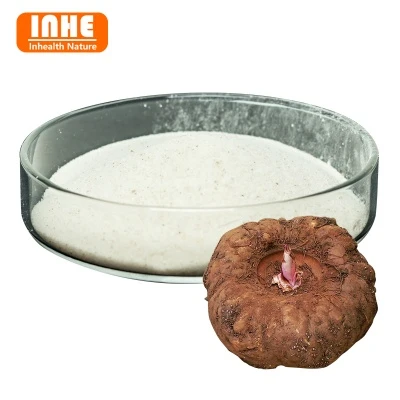
Ingredients such as Konjac Root Glucomannan Powder and Gymnema Extract Powder exhibit distinct moisture sorption profiles. Co-storage in shared unventilated spaces or use of shared uncleaned handling equipment creates two risks: particulate cross-contamination and inter-powder moisture transfer. Porous powder matrices can absorb or desorb ambient moisture; a previously moist extract can act as a local humidity source and elevate moisture exposure of adjacent sensitive materials, including silybin phospholipid complexes.
Even extracts generally considered chemically stable, such as St. John's Wort Extract Powder, can desorb retained moisture into the storage environment if their primary packaging is compromised.
Control measures: store each extract in isolated sealed packaging; clean and dry all handling equipment between batches; segregate hygroscopic and light-sensitive materials in dedicated storage zones.
The high-risk moment is opening and dispensing
Most storage guidance assumes the drum stays closed. In practice, the first opening and every dispensing event after it is where moisture enters. Practical controls:
a. Dispense in a controlled environment-a dehumidified dispensing room or low-humidity weighing booth, not a general warehouse aisle.
b. Minimize open time and open–close cycles-decant the full quantity needed in one session.
c. Purge headspace with nitrogen or argon before resealing partially used drums intended for long-term storage.
d. Reseal with the original gasket and a consistent closure torque; inspect gaskets for deformation and replace if the drum will be opened repeatedly.
e. Label the first-open date on every drum to prioritize older, already-opened stock for near-term production.
Shelf-life and verification
Under correct storage, silybin phospholipids carry a 24-month shelf life from manufacture; poor storage can reduce this to 12 months or less. For long-term inventory, test batches every six months by HPLC and confirm silybin content remains within specification. A batch below 80% of original silybin content should not go into finished products.
Supplier checklist for B2B buyers
Before approving a supplier or accepting a shipment, confirm:
a. Container type: opaque HDPE or amber PET, never clear.
b. Seal integrity: hermetic, tested before dispatch.
c. Desiccant inclusion: standard for humid climates.
d. Shipping configuration: temperature-controlled or insulated for hot-climate orders over 50 kg; foil-wrapped packs for smaller shipments.
e. Documentation: CoA with silybin content and storage recommendations matched to your climate zone.
If a supplier cannot answer these questions clearly, that tells you how the material is handled before it reaches you.
How we support B2B buyers
We supply silybin phospholipids and a range of botanical extract powders-including green tea, konjac, gymnema, and St. John's wort-with packaging and shipping configured to your climate and order size. What we can do for your team:
a. Batch-specific CoA with silybin content before every shipment.
b. Climate-matched packaging: HDPE drums, desiccants, and insulated or temperature-controlled shipping for hot-climate orders.
c. Storage protocol guidance for multi-extract warehouses, including segregation and dispensing recommendations.
d. Sample and specification support for formulation trials.
Contact us at info@inhealthnature.com to discuss your requirements, request a sample, or get a quote.
References
[1] Graf TN, Cech NB, Polyak SJ, Oberlies NH. A validated UHPLC-tandem mass spectrometry method for quantitative analysis of flavonolignans in milk thistle (Silybum marianum) extracts. Journal of Pharmaceutical and Biomedical Analysis. 2016;126:26–33. doi:10.1016/j.jpba.2016.04.028
[2] El-Samaligy MS, Afifi NN, Mahmoud EA. Evaluation of hybrid liposomes-encapsulated silymarin regarding physical stability and in vivo performance. International Journal of Pharmaceutics. 2006;319(1–2):121–129. doi:10.1016/j.ijpharm.2006.04.023
[3] Roos YH. Water Activity and Glass Transition. In: Barbosa-Cánovas GV, Fontana AJ, Schmidt SJ, Labuza TP, editors. Water Activity in Foods: Fundamentals and Applications. 2nd ed. Wiley; 2020: Chapter 3.