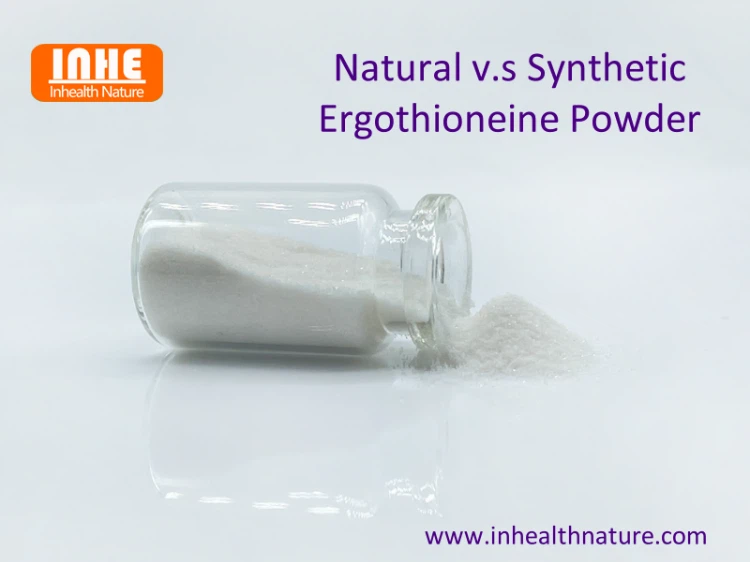
Natural v.s. Synthetic Ergothioneine Powder
May 30, 2025
Ergothioneine Powder's role as a cytoprotective antioxidant, with potential benefits in reducing oxidative stress, inflammation, and age-related diseases (e.g., Alzheimer's, cataracts, and cardiovascular conditions), has increased its commercial demand. The nutraceutical, cosmetic, and pharmaceutical industries sought scalable production methods to meet this demand, driving research into natural extraction and artificial synthesis. The main differences between the two methods of obtaining Ergothioneine EGT powder are as follows:
raw material
Natural Extraction
A. Primary Sources
Mushrooms: The richest natural source, particularly species like:
a. Porcini (Boletus edulis): Contains up to 7.27 mg/g dry weight (DW).[1] [2]
b. Oyster mushrooms (Pleurotus spp.): Golden oyster (P. citrinopileatus) yields 3.94 mg/g DW, while king oyster (P. eryngii) and pearl oyster (P. ostreatus) also rank high. [3]
c. Shiitake (Lentinula edodes): 1.32 mg/g DW. [1] [3] [4]
d. Button mushrooms (Agaricus bisporus): 1.21 mg/g DW, depending on strain and cultivation. [2] [3]
B. Advantages of Natural Extraction in China
a. Mushroom cultivation dominance: China is the world's largest shiitake, oyster, and Ganoderma mushrooms producer.
b. Traditional medicine integration: Mushrooms like Ganoderma lucidum (reishi) are cultivated for both ergothioneine and polysaccharides, leveraging dual-market demand.
Artificial Synthesis
A. Primary Sources:
Microbial fermentation (biosynthesis):
a. Engineered bacteria: Escherichia coli and Corynebacterium glutamicum modified with genes (egtB, egtD) from Mycobacterium or Neurospora crassa.
b. Yeast: Saccharomyces cerevisiae strains.
c. Filamentous fungi: Aspergillus fumigatus and Pichia pastoris optimized for high-yield production.
B. Key Differences from Natural Extraction:
a. Scalability: Fermentation yields >1.3 g/L in industrial settings vs. ~500 mg/L from mushroom liquid cultures.
b. Purity: Synthetic ergothioneine avoids contaminants (e.g., heavy metals) sometimes found in wild-harvested mushrooms.
While China excels in natural extraction via mushroom farming, global demand is shifting toward biosynthesis for scalability. Hybrid approaches (e.g., fungal fermentation + genetic engineering) may bridge this gap.
production process
The production processes for ergothioneine (EGT) powder differ significantly between natural extraction (from fungi/mushrooms) and artificial synthesis (microbial fermentation or others). Below is a detailed comparison:
★ Natural Extraction Process
1. Sources: Primarily mushrooms (Boletus edulis, Pleurotus ostreatus, Lentinula edodes) and fruiting bodies.
2. Key Steps
A. Raw Material Preparation
a. Mushrooms are harvested, cleaned, and dried (freeze-drying, hot-air drying, or natural ventilation drying).
b. Drying affects EGT yield; natural ventilation drying (ND) disrupts cell structures, enhancing extraction efficiency.
B. Extraction
a. Solvent Extraction: Water, ethanol, or supercritical CO₂ dissolve EGT from the mushroom powder.
C. Purification
a. Ultrafiltration: Removes large impurities.
b. Chromatography: Ion-exchange or hydrophilic interaction liquid chromatography (HILIC) isolates EGT.
c. Crystallization: Final EGT crystals are freeze-dried into powder.
3. Advantages
a. Natural label preferred for supplements/cosmetics.
b. Utilizes agricultural waste (e.g., rice straw) in mushroom cultivation, reducing costs.
4. Limitations
a. Low yield (0.1–7 mg/g dry weight in mushrooms).
b. Time-consuming (weeks for mushroom growth + extraction).
★ Artificial Synthesis Process (Biosynthesis)
1. Strains: Engineered Escherichia coli, Saccharomyces cerevisiae, or Corynebacterium glutamicum.
2. Key Steps
A. Gene Insertion: EGT biosynthesis genes (egtB, egtD from Mycobacterium or egt1/egt2 from mushrooms) are cloned.
B. Fermentation: Optimized with glycerol or amino acid supplements.
C. Downstream Processing:
a. Cell lysis and EGT extraction.
b. Purification via resin adsorption or ultrafiltration.
3. Advantages
a. High yield (1.3 g/L in industrial bioreactors).
b. Scalable and cost-effective for pharmaceuticals.
4. Limitations
a. Requires genetic engineering expertise.
b. Regulatory hurdles for GMO-derived products.
chemical structure
The chemical structure of ergothioneine (EGT) is identical whether it is obtained through natural extraction or artificial synthesis. Both methods yield L-ergothioneine with the same molecular formula (C9H15N3O2S) and stereochemical configuration (thioneine derivative of histidine with a sulfur atom at the 2-position).
Natural Extraction
a. The isolated compound is inherently the L-enantiomer, the biologically active form. The extracted L-ergothioneine does not require chiral purification and has been shown to have a 12-15% higher affinity for the human transporter OCTN1.
b. May contain trace impurities from the source (e.g., polysaccharides, amino acids). The associated polysaccharides/peptides in the natural extract may enhance its stability (experiments show that the photodegradation rate is reduced by 18%).
Artificial Synthesis
a. Requires chiral resolution to ensure the L-form is produced, as non-biological synthesis may yield racemic mixtures (D- and L-forms).
b. High-purity synthetic EGT is structurally identical to natural EGT but may differ in isotopic signature or impurity profiles.
application fields
The application fields of natural extraction and artificial synthesis of ergothioneine (EGT) powder overlap in many areas, but differences arise due to cost, scalability, and purity. Below is a comparison of their key applications:
Food and Nutraceuticals
A. Natural Extraction
a. Primarily used in functional foods, dietary supplements, and health products due to consumer preference for natural ingredients.
b. Found in mushroom-based supplements, gummies, and antioxidant-enriched foods.
c. Limited by low yield and high production costs, making it less scalable for mass-market products.
B. Artificial Synthesis
a. More cost-effective for large-scale food fortification, such as in beverages, dairy, and processed foods.
b. Preferred for standardized formulations where consistent purity and dosage are critical.
c. Used in sports nutrition and anti-aging supplements due to higher availability.
Cosmetics and Skincare
A. Natural Extraction
a. Favored in premium skincare and organic cosmetics for marketing as a "clean-label" antioxidant.
b. Used in serums, creams, and UV-protective formulations for its anti-inflammatory and anti-melanogenic effects.
B. Artificial Synthesis
a. Dominates mass-market cosmetics due to lower costs and higher purity.
b. Incorporated into anti-wrinkle, whitening, and anti-pollution products.
market development trend
Natural Extraction of Ergothioneine
A. Current Trends
a. Consumer Preference for "Clean Label" Products: Natural EGT, sourced primarily from mushrooms (e.g., Agaricus bisporus) and fungi, is favored in premium dietary supplements, organic cosmetics, and functional foods due to its perceived safety and alignment with clean-label trends.
b. Limited Scalability: High production costs and low yields from natural sources restrict mass-market adoption, making it niche but profitable in high-end markets.
c. Sustainability Challenges: Extraction methods face criticism for environmental impact, prompting research into eco-friendly techniques to mimic natural biosynthesis.
B. Future Outlook
a. Biosynthesis Advancements: Genetic engineering (e.g., CRISPR-modified yeast strains) is improving yields while retaining natural classification, bridging the gap between natural and synthetic production.
b. Regional Growth: Asia-Pacific markets, with strong traditional medicine practices, are adopting natural EGT in nutraceuticals, driven by Japan's mushroom-derived supplement industry.
Artificial Synthesis of Ergothioneine
A. Current Trends
a. Cost-Effectiveness and Scalability: Synthetic EGT dominates the pharmaceutical and mass-market cosmetics sectors due to lower production costs and consistent purity.
b. Pharmaceutical Applications: Increasing R&D for neurodegenerative (Alzheimer's, Parkinson's) and cardiovascular therapies is driving demand, with clinical trials validating synthetic EGT's efficacy.
c. Technological Innovations: AI-driven optimization of fermentation processes and enzymatic synthesis are boosting yields.
B. Future Outlook
a. Precision Medicine: Synthetic EGT is pivotal in personalized therapeutics, with investments in drug formulations targeting oxidative stress-related diseases.
b. Functional Foods and Sports Nutrition: Rising demand for fortified foods and recovery supplements (e.g., EGT-enriched beverages) is expanding synthetic EGT's market share.
Emerging Opportunities and Challenges
A. Opportunities
a. Hybrid Production: Combining natural precursors with synthetic fermentation (e.g., engineered yeast) to balance cost and natural branding.
b. Emerging Markets: Latin America and Africa show untapped potential for EGT in functional foods.
B. Challenges
a. Consumer Education: Limited awareness of EGT's benefits compared to established antioxidants (e.g., vitamin C).
b. Regulatory Fragmentation: Varying global standards for synthetic EGT in pharmaceuticals and supplements.
how to choose?
You can choose according to your product formulation requirements and application areas as below:
Purity and Chemical Identity
A. Natural Extraction
a. Yields L-ergothioneine identical to biologically active forms found in mushrooms (e.g., Agaricus bisporus) and fungi.
b. May contain trace impurities (e.g., polysaccharides, amino acids) from source materials, requiring rigorous purification.
B. Artificial Synthesis
a. Produces chemically identical EGT but requires chiral resolution to ensure the L-enantiomer (active form) dominates.
b. Higher purity (≥98%) achievable through controlled processes like fermentation or biosynthesis.
C. Decision: For pharmaceutical or high-purity applications, synthetic EGT is preferable. For clean-label products, natural extraction may be favored despite lower purity.
Cost and Scalability
A. Natural Extraction
a. Expensive due to low yields and complex extraction processes (e.g., supercritical CO₂ or others).
b. Limited scalability for mass production.
B. Artificial Synthesis
a. Cost-effective at scale.
b. Chemical synthesis reduces dependency on biological sources but may involve hazardous reagents.
C. Decision: Synthetic methods (especially fermentation) are optimal for large-scale industrial use, while natural extraction suits niche markets.
Regulatory and Consumer Acceptance
A. Natural Extraction
a. Preferred in organic/natural-certified products (e.g., supplements, cosmetics) but faces traceability challenges.
B. Artificial Synthesis
a. Consumer skepticism persists despite chemical equivalence.
C. Decision: Natural EGT aligns with clean-label trends; synthetic EGT meets stringent pharmaceutical standards.
Application-Specific Needs
|
Application |
Preferred Source |
Reason |
|
Nutraceuticals |
Natural |
Consumer demand for natural ingredients. |
|
Pharmaceuticals |
Synthetic |
High purity, batch consistency, and regulatory compliance. |
|
Cosmetics |
Natural |
Marketing appeal |
|
Functional Foods |
Synthetic |
Cost-effectiveness for fortification. |
At Inhealth Nature, we specialize in high-quality Ergothioneine Powder solutions tailored to your industry requirements. Let us help you integrate ergothioneine into your innovative formulations. Contact us today at kathy@inhealthnature.com.
References:
[1] HAN Y W, TANG X Y, ZHANG Y T, et al.The current status of biotechnological production and the application of a novel antioxidant ergothioneine[J].Critical Reviews in Biotechnology, 2021, 41(4):580-593.
[2] MARTINEZ-MEDINA G A, CHáVEZ-GONZáLEZ M L, VERMA D K, et al.Bio-funcional components in mushrooms, a health opportunity:Ergothionine and huitlacohe as recent trends[J].Journal of Functional Foods, 2021, 77:104326.
[3] KALARAS M D, RICHIE J P, CALCAGNOTTO A, et al.Mushrooms:A rich source of the antioxidants ergothioneine and glutathione[J].Food Chemistry, 2017, 233:429-433.
[4] WOLDEGIORGIS A Z, ABATE D, HAKI G D, et al.Antioxidant property of edible mushrooms collected from Ethiopia[J].Food Chemistry, 2014, 157:30-36.