

How to Choose White Kidney Bean Extract for Weight Management?
Apr 28, 2025
Maybe sometimes you are confused, why the Internet is promoting White Kidney Bean Extract Powder can help with weight management, but after taking it, there is no effect, what is going on? Is it that the effects promoted on the Internet are exaggerated? Or is there another reason? The root of all these problems is to first understand the differences between white kidney bean extract and white kidney bean powder. Next, we will analyze the differences between the two and how to choose the right product from the following aspects.
White kidney bean extract and white kidney bean powder are derived from the same source, white kidney beans (Phaseolus vulgaris), but they differ significantly in active ingredients, extraction process, health benefits, safety, and product applications as follows:
The differences in active ingredients
White Kidney Bean Extract
White kidney bean extract is a concentrated form that specifically isolates and standardizes certain bioactive compounds from the raw beans. The extraction process focuses on preserving and enhancing particular active ingredients while removing other components:
a. Primary Active Ingredient: The most important active compound in the extract is alpha-amylase inhibitor (phaseolamin), which is responsible for the starch-blocking properties. This protein compound makes up a significant portion of standardized extracts.
b. Standardized Content: High-quality extracts are typically standardized to contain specific percentages of phaseolamin, often ranging from 10-30% depending on the extraction ratio (4:1, 10:1, etc.). This means the active compounds are present in known, consistent amounts.
c. Other Bioactives: Polyphenolic compounds, certain plant proteins, dietary fibers, trace amounts of saponins, and phytosterols.
White Kidney Bean Powder
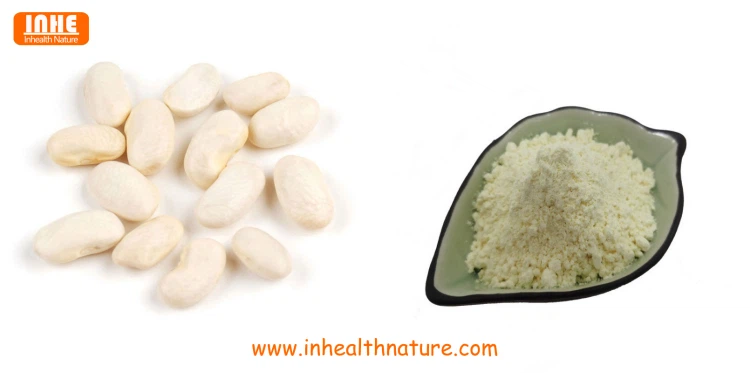
White kidney bean powder is made from the whole, dried beans ground into a fine powder. It contains the complete nutritional profile of the original bean:
a. Complete Nutritional Profile: Contains all the bean's proteins (including protease inhibitors, lectins, and phaseolin), high in starchy carbohydrates (amylose and amylopectin), rich in dietary fibers (including resistant starch and alpha-galactosides), contains B vitamins, vitamin K1, iron, manganese, copper, potassium, and molybdenum, and includes saponins, arcelins, trypsin inhibitors, and phytic acid.
b. Alpha-Amylase Inhibitors: While present, these are in much lower concentrations compared to extracts. Cooking and processing significantly reduce their activity.
c. Higher Caloric Content: Due to the presence of all macronutrients (proteins, carbs, fats) in their natural ratios.
The differences in the extraction process
★ White Kidney Bean Extract
A. Extraction Process
a. Acidic ultrasonic extraction: White kidney bean crude powders are mixed with a pH 3.8-4.4 acidic aqueous solution and ultrasonically separated to separate the liquid phase.
b. Ultrafiltration purification: A 50-80kDa ultrafiltration membrane removes polysaccharides, and α-amylase inhibitors (α-AI) are concentrated by 20-30kDa membrane.
B. Features
The process is complex and requires the removal of impurities such as starch, phytohaemagglutinin (PHA), and trypsin inhibitor, focusing on retaining highly active α-AI (a key ingredient that inhibits amylase).
★ White Kidney Bean Powder
A. Extraction Process
a. Raw material processing: Select high-quality white kidney beans, wash, and remove impurities.
b. Soaking and steaming: Soak for 6-12 hours to soften starch, and steam for 20-30 minutes to destroy anti-nutritional factors (such as trypsin inhibitors).
c. Puffing treatment: High temperature and high pressure (150-200℃, 8-15 MPa) puffing for 1-3 minutes softens the starch structure and improves digestibility.
d. Drying and crushing: Hot air drying to moisture <10%, crushed to 60-100 mesh.
B. Features
The process is simple, retaining the nutrition of the whole bean (starch, protein, dietary fiber), but no special extraction of active ingredients.
The differences in health benefits
|
Health Benefits |
White Kidney Bean Extract |
White Kidney Bean Powder |
Key Differences |
|
Weight Management |
1. Specifically designed to inhibit α-amylase, the enzyme responsible for breaking down complex carbohydrates into absorbable sugars. |
1. Promotes weight management through high fiber content (11g per cup cooked), which increases satiety. |
The extract directly inhibits carb absorption while the whole powder supports weight management through satiety and nutrient density. |
|
Blood Sugar Regulation |
1. Significantly reduces postprandial glucose spikes by 20-30% in clinical trials. |
1. Naturally low glycemic index due to fiber slowing glucose absorption. |
The extract actively blocks carbohydrate digestion while the whole powder provides slow-release carbs and nutrients that support metabolic health. |
|
Digestive Health |
1. May cause mild digestive discomfort (gas, bloating) in some users due to undigested carbs reaching the colon. |
1. Excellent source of both soluble and insoluble fiber (11g per cup). |
The whole powder is superior for digestive health due to its fiber content, while the extract may cause some digestive changes without providing fiber benefits. |
|
Cardiovascular Health |
1. Indirect heart benefits through weight management and glucose control. |
1. Soluble fiber binds bile acids, helping lower LDL cholesterol. |
The whole powder offers more comprehensive cardiovascular support through multiple mechanisms. |
The differences in safety
The safety differences between white kidney bean extract and white kidney bean powder primarily revolve around their content of phytohaemagglutinin (PHA), a potentially harmful lectin.
PHA in Whole White Kidney Beans
White kidney beans (Phaseolus vulgaris), also known as cannellini beans or white navy beans, naturally contain significant amounts of phytohaemagglutinin (PHA), a type of lectin that can be toxic to humans if consumed in sufficient quantities. In their raw or improperly cooked or processed state, these beans contain:
a. High concentrations of PHA (approximately 20,000-70,000 hau per gram)
b. Other anti-nutritional factors like trypsin inhibitors
c. Complex carbohydrates that may cause digestive discomfort
PHA is particularly concerning because it can:
1. Causes red blood cell agglutination (clumping)
2. Disrupt nutrient absorption in the gut
3. Lead to severe gastrointestinal distress when consumed in undercooked beans
PHA in White Kidney Bean Powder
White kidney bean powder is made by grinding dried beans into a fine powder. This form:
a. Contains all the original components of the bean, including PHA
b. Requires proper heat processing to deactivate the lectins
c. Poses significant safety risks if not properly treated before consumption
White Kidney Bean Extract: The Safer Alternative
White kidney bean extract is a processed form that specifically isolates certain beneficial compounds while removing potentially harmful components. Key characteristics:
a. Targeted Extraction: Focuses on active compounds like phaseolamin (a starch blocker) while reducing PHA content
b. Standardized Processing: Commercial extraction typically includes steps to remove or deactivate lectins
c. Concentrated Benefits: Provides higher levels of desired active ingredients per weight than whole bean powder
The differences in product applications
|
Item |
Supplement Applications |
Food Applications |
Regulatory and Labeling |
Cost and Availability |
|
White Kidney Bean Extract |
1. Weight loss supplements and "carb blocker" formulations. |
1. Sparingly as an additive in functional foods designed for weight management. |
1. Often marketed with specific structure/function claims about carbohydrate absorption. |
1. More expensive due to the concentration process. |
|
White Kidney Bean Powder |
1. General nutrition and protein supplements. |
1. As a base for soups, stews, and dips. |
1. Typically labeled as a food ingredient rather than a supplement. |
1. Less expensive as it requires minimal processing. |
Which one should I choose?
The choice between these two forms depends on your specific health goals:
★ Choose White Kidney Bean Extract if:
a. Your primary goal is weight loss or carb-blocking
b. You want to manage post-meal blood sugar spikes
c. You're willing to supplement with meals
d. You prefer a more concentrated, targeted approach
★ Choose White Kidney Bean Powder if:
a. You seek general health promotion
b. Digestive health and regularity are priorities
c. You want the full nutritional benefits of the whole bean
d. You prefer food-based nutrition over supplements
If you have any other questions in the process of purchasing and selecting White Kidney Bean Extract Powder, please contact us at bella@inhealthnature.com.


