

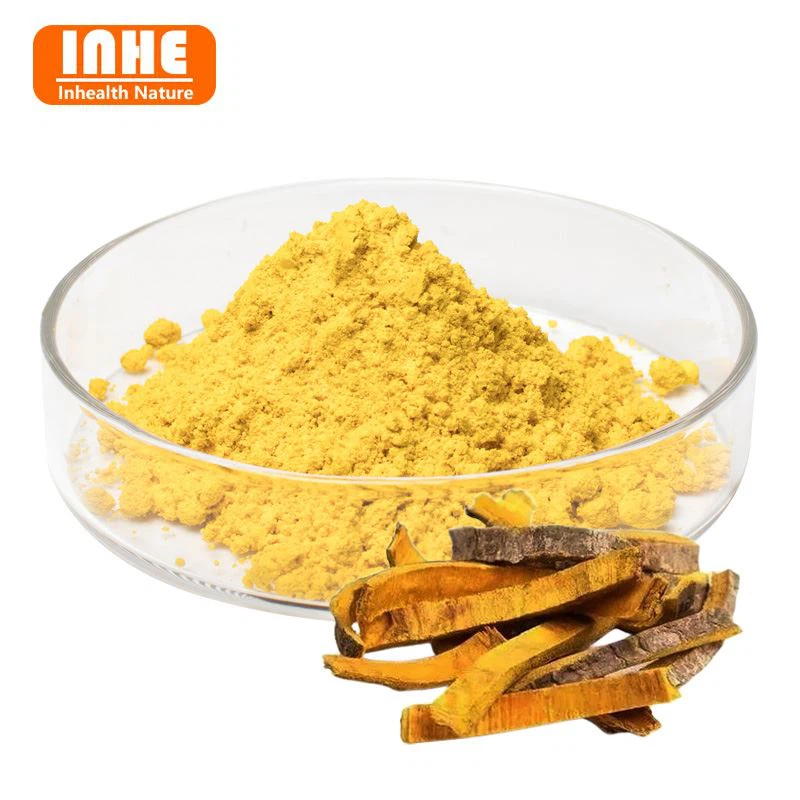
Berberine Hydrochloride Powder
Spectrum Antibacterial Ingredient
Mature R&D Capabilities, Stable Supply Chain, and Bulk Pricing Available
Stable Inventory: 500kg
CAS No.: 633-65-8
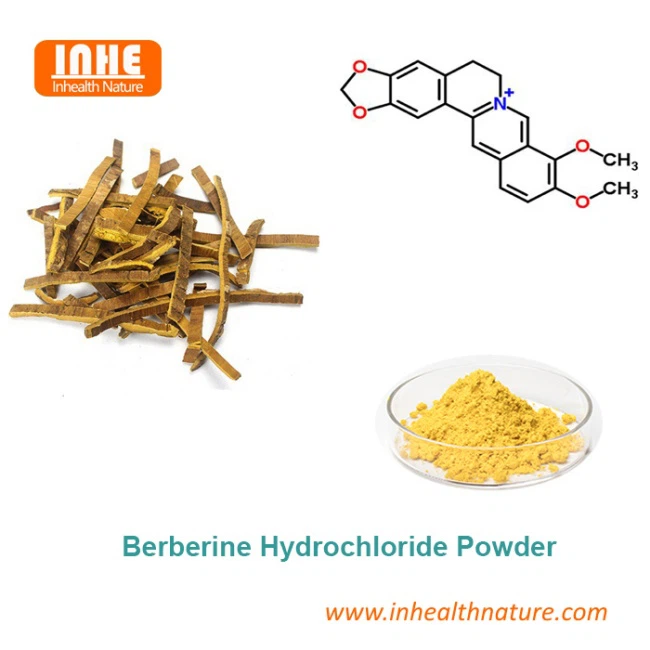
Botanical source: Phellodendron chinense Schneid.
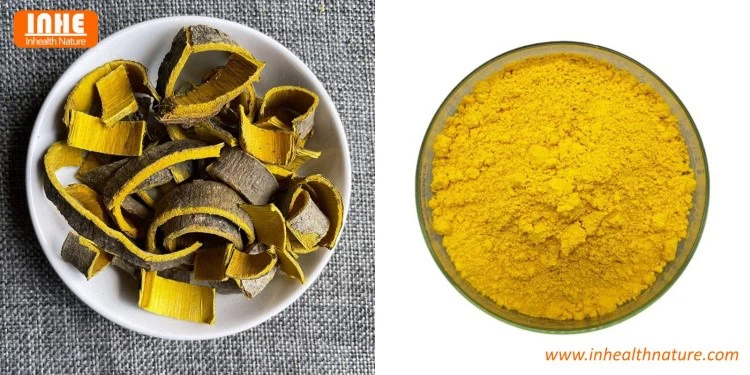
Part of Used: Bark
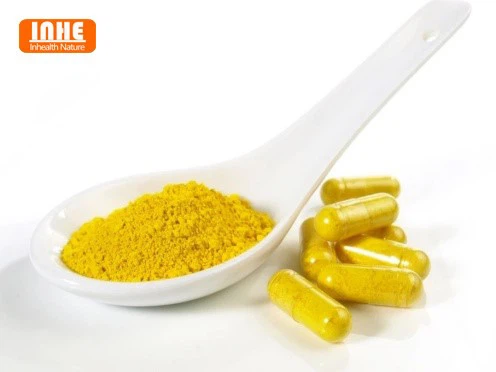
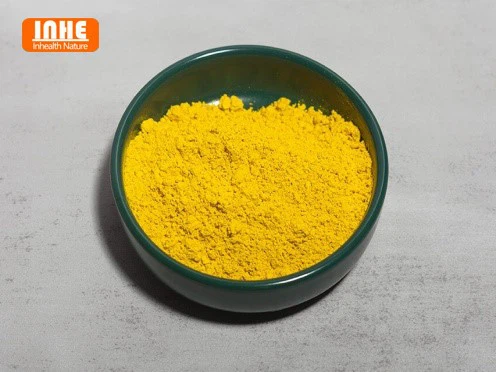
Appearance: Yellow Crystalline Powder
Active Ingredient: Berberine Hydrochloride
Specification: 85%, 95%, 97%
Chemical Formula: C20H18ClNO4
Test Method: Titration
Features: Vegan, Gluten-Free, Non-GMO, Non-ETO
Certificate: ISO, Kosher, Halal, FDA, FSMA
Package: 25kg/drum
Lead Time: 5 days after payment is received
Free Sample: 10-20g
Delivery: FedEx, DHL, Ship by air, Ship by sea
MOQ: 10kg
Shaanxi Inhealth Nature Industry Co., Ltd. is one of the most experienced manufacturers and suppliers of berberine hydrochloride powder in China, featured by quality products and good price. Welcome to wholesale bulk high-grade berberine hydrochloride powder from our factory. Contact us for free sample.
What is berberine HCL powder?
Berberine Hydrochloride Powder is a potent ingredient extracted from the bark of Phellodendron chinense Schneid. This is famous for its wide range of significant health-supporting properties. The ingredient is a yellow crystalline powder that is odorless but possesses an extremely bitter taste. This intense bitterness makes the pure powder unpalatable for direct consumption. It is necessary to use encapsulation, such as in vegetable capsules or tablets, to effectively mask the unpleasant flavor. Berberine HCL powder is easily soluble in boiling water, slightly soluble in cold water, and almost insoluble in cold ethanol, chloroform, and ether. This limited solubility in cold water can pose a challenge to its bioavailability. To overcome this, advanced techniques like pharmaceutical cocrystallization are employed. By cocrystallizing berberine with other bioactive compounds, especially certain flavonoids, it can significantly improve its dissolution rate and absorption in the body. Berberine Hydrochloride is backed by extensive research for its diverse health benefits, which include broad-spectrum antibacterial & anti-inflammatory activities, potent antioxidant effects, blood sugar regulation, cardiovascular protection, and gut health improvement.
As a leading supplier, Inhealth Nature provides high-quality Berberine Hydrochloride ingredients with many advantages:
a. Mature R&D Capabilities: Our expert team continuously works on optimizing bioavailability through methods like cocrystallization.
b. Stable Supply Chain: We can guarantee a stable and consistent supply of berberine hydrochloride ingredient to our customers.
c. Competitive Bulk Pricing: We offer cost-effective solutions for large-volume manufacturers.
d. Product Versatility: We supply various standardized concentrations (85%, 95%, and 97%) to meet diverse formulation needs and can provide them in multiple dosage forms, including bulk powders, capsules, and tablets.
specification sheet
|
Analysis |
Specification |
TEST METHOD |
|
Appearance |
Yellow Crystalline Powder |
Visual |
|
Moisture |
≤12.0% |
Organoleptic |
|
Ash |
≤0.2% |
Organoleptic |
|
Total Heavy Metals |
≤10ppm |
ICP-MS / USP <232> |
|
Cd |
≤1.0ppm |
ICP-MS / USP <232> |
|
As |
≤1.0ppm |
ICP-MS / USP <232> |
|
Pb |
≤2.0ppm |
ICP-MS / USP <232> |
|
Hg |
≤1ppm |
ICP-MS / USP <232> |
|
Pesticides Residue |
Meet the USP standard |
USP |
|
Residual Solvent |
Meet Eur. Ph 7.0<5.4> |
EP |
|
Assay |
||
|
Berberine Hydrochloride |
97% |
Titration |
|
Microbiology |
||
|
Total Plate Count |
≤1000cfu/g |
USP<2021> |
|
Fungi and yeast |
≤100cfu/g |
USP<2021> |
|
E. Coli |
Negative |
USP<2021> |
|
Salmonella |
Negative |
USP<2021> |
|
Storage |
Store in a cool & dry place, keep away from strong light and heat. |
|
|
Shelf Life |
Does not destroy the original packaging for three years when properly stored. |
|
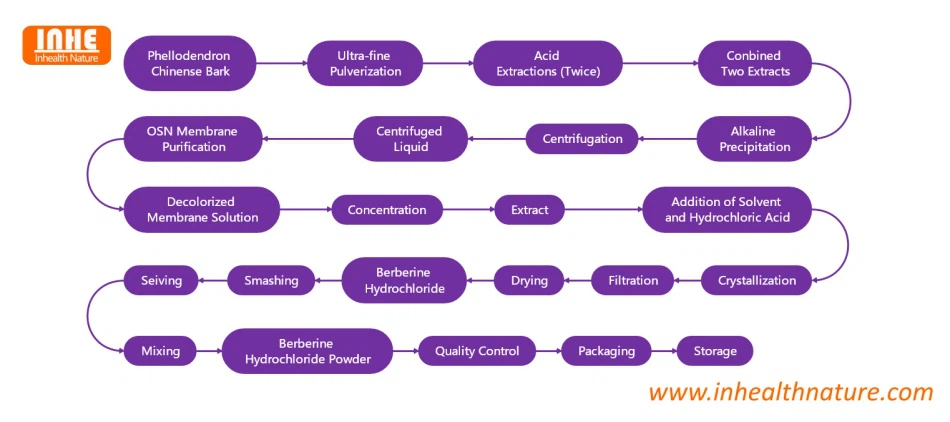
our production process
We use the following production process to obtain 97% berberine HCL powder from Phellodendron chinense.
a. Ultra-fine pulverization: Dry Phellodendron chinense bark is ground in an ultra-fine grinder.
b. Acid extraction: The ultra-finely ground Phellodendron chinense powder is placed in an extraction tank, and 10 to 15 times the volume of acid solution is added. The mixture is stirred thoroughly until homogeneous. Extraction is performed twice at a constant temperature of 15-20℃, each time for 1-2 hours.
c. Combining extracts: The two acid extracts are combined in a collection tank to obtain the total extract.
d. Alkali precipitation: While stirring, alkali solution is slowly added to the combined extract to adjust the pH to 7-7.5 (neutral to weakly alkaline).
e. Centrifugation: The settled mixture is pumped into a centrifuge for solid-liquid separation. The supernatant, i.e., the centrifuged liquid, is collected; the bottom solid residue is discarded.
f. Two-stage OSN organic membrane purification: The centrifuged liquid is pumped into a two-stage OSN (organic solvent nanofiltration) membrane separation system for purification. Collect the concentrated solution retained by the membrane, i.e., the decolorized membrane solution.
g. Concentrate into an extract: Transfer the decolorized membrane solution to a vacuum concentration tank.
h. Dissolve and crystallize: Add an appropriate amount of organic solvent to the extract and stir until the berberine is fully dissolved.
i. Acidify to salt and crystallize: Slowly add hydrochloric acid to the above solution while stirring.
j. Solid-liquid separation: Filter or vacuum filter the mixture after crystallization, and collect the filter cake (wet coarse berberine hydrochloride crystals).
k. Drying: Place the wet crystals in a vacuum drying oven or fluidized bed dryer and dry at low temperature to completely remove residual solvent and moisture, obtaining a dry, high-purity berberine hydrochloride product.
l. Pulverize and sieve: Pulverize, sieve, and mix the berberine hydrochloride to form berberine HCL powder.
m. Inspect and storage: Inspect, package, and store the berberine HCL powder.
our quality control measures
A. We use DNA testing to confirm the correct species, Phellodendron chinense. This can be accurately identified to prevent adulteration.
B. We test the berberine content in the incoming bark. The bark should have a minimum berberine content of≥6% as measured by HPLC.
C. We screen raw materials for contaminants, including:
a. Pesticide residues, with limits set at very low levels (e.g., ≤0.001ppm total).
B. Heavy metals like Lead (Pb), Cadmium (Cd), Arsenic (As), and Mercury (Hg) are analyzed using sensitive techniques like ICP-MS.
C. Microbial contamination (Total Plate Count, Yeast/Mold, and pathogens like E. coli and Salmonella).
A. We closely monitor and optimize the extraction parameters, such as solvent concentration, temperature, and extraction time, during production to ensure the batch-to-batch quality of berberine hydrochloride ingredients.
B. For purification, we use methods such as adsorbent resins. Simultaneously, we employ an alternative technique that entails dissolving the crude product in a heated solvent, followed by refluxing, hot filtration to eliminate insoluble contaminants, and crystallization to produce a purer product.
A. The core test is to determine the content of berberine hydrochloride. According to pharmacopeia standards, the final product must contain a defined amount of active ingredient, which should often be more than 97%.
B. This is a critical safety test. Using techniques like Titration, the product is analyzed for the presence and quantity of related impurities and degradation products. Controlling the impurity profile ensures the product's purity and safety.
C. Since organic solvents are used in production, tests must be in place to ensure that any residual solvents in the final product are below safe limits.
D. The product should be tested for potential contaminants such as heavy metals and pesticide residues originating from the plant material.
E. Additional tests typically include checks for appearance, color, odor, solubility, moisture content, and ash value.
What are the health benefits of berberine HCL Powder?
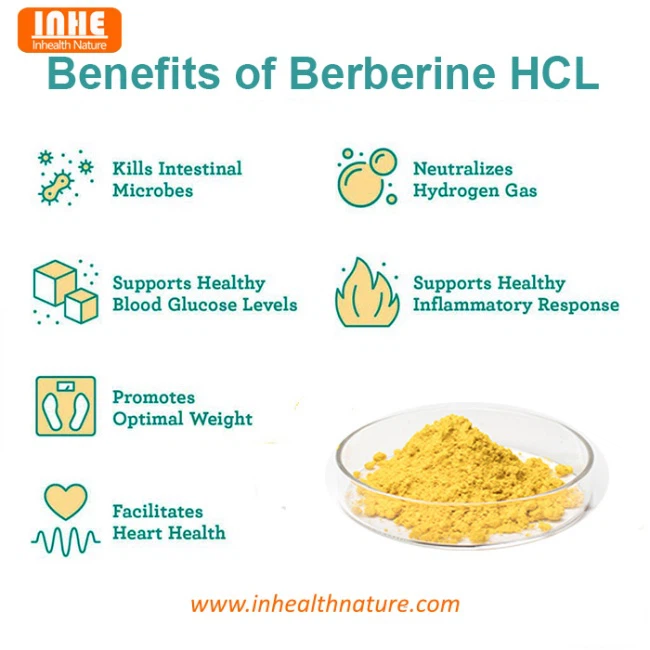
Here are the main health benefits of Berberine Hydrochloride Powder:
Gut Health and Antibacterial Properties
Berberine hydrochloride has broad-spectrum antimicrobial activity against bacteria, yeast, and parasites. It has been used traditionally for infectious diarrhea (like traveler's diarrhea) and Small Intestinal Bacterial Overgrowth (SIBO). It may also act as a prebiotic, promoting the growth of beneficial gut bacteria.
Powerful Antioxidant and Anti-Inflammatory Effects
Berberine hydrochloride is a potent antioxidant. It doesn't just directly neutralize free radicals itself. It powerfully activates the body's own antioxidant pathways. Berberine HCL activates a protein called Nrf2 (Nuclear factor erythroid 2-related factor 2), which is often called the "master regulator" of antioxidant response. When activated, Nrf2 travels to the cell's nucleus and turns on the production of a wide array of the body's most important internal antioxidants, such as glutathione, superoxide dismutase (SOD), and catalase. By combating oxidative stress, berberine indirectly reduces inflammation. It directly inhibits pro-inflammatory signaling molecules like NF-kB, which is a major driver of chronic inflammation in the body.
Blood Sugar Control and Type 2 Diabetes Management
Berberine HCL improves insulin sensitivity, helps your body use blood sugar more effectively, and reduces sugar production in the liver. It may also slow the breakdown of carbohydrates in your gut. Multiple studies have shown that berberine can be as effective as some prescription diabetes drugs (like metformin) at lowering fasting and post-meal blood sugar levels and improving long-term blood sugar markers (HbA1c).
Cardiovascular Health
Berberine has several positive effects on heart health and cholesterol levels. It can significantly lower LDL ("bad") cholesterol and triglycerides while raising HDL ("good") cholesterol. By improving these markers, berberine can reduce the risk factors for atherosclerosis (hardening of the arteries) and heart disease.
Weight Management and Metabolic Syndrome
Berberine hydrochloride appears to help with weight loss by improving the function of fat-regulating hormones like insulin and leptin. It may inhibit the growth of fat cells at the molecular level. Research shows it can lead to a modest reduction in Body Mass Index (BMI) and waist circumference.
berberine HCL powder applications
Applications of Berberine Hydrochloride Powder cover pharmaceuticals, dietary supplements, and skincare.
Pharmaceuticals
In the pharmaceutical industry, Berberine Hydrochloride is valued for its metabolic and gastrointestinal properties, formulated into precise dosage forms for consistent delivery. Common Formulations:
a. Oral Tablets and Capsules: These are the most prevalent forms, designed for easy ingestion and accurate dosing.
b. Enteric-Coated Tablets: This special coating prevents the tablet from dissolving in the stomach, ensuring the release of the active ingredient in the intestines to improve efficacy and reduce stomach upset.
c. Powders: The pure powder can be used to create liquid suspensions or solutions, offering a flexible dosing option, particularly useful for individuals who have difficulty swallowing pills.
Dietary Supplements
In the supplement market, Berberine HCL is popular for its role in promoting wellness and metabolic balance, often combined with other synergistic ingredients. Common Formulations:
a. Vegetarian Capsules: A preferred choice for health-conscious consumers, often using cellulose or other plant-based shells.
b. Liquid Tinctures and Extracts: Alcohol-based or glycerin-based solutions that allow for rapid absorption and flexible dosing.
c. Powder in Bulk or Sachets: Pure berberine powder is sold for consumers to mix into their smoothies, shakes, or water, allowing for customizable serving sizes.
Skincare
Due to its anti-inflammatory and antimicrobial properties, Berberine HCL is emerging as a functional ingredient in cosmetic and personal care products. Common Formulations:
a. Face Creams and Serums: Incorporated into emulsions aimed at soothing irritated skin, reducing the appearance of redness, and promoting a clear complexion.
b. Toners and Cleansers: Added to liquid formulations to provide a purifying and clarifying effect during the cleansing routine.
our factory
1. We are a leading herbal extract manufacturer with more than 11 years of industry experience.
2. We have over 300 products for you to choose from, including monomers, standardized extracts, plant powders, essential oils, supercritical CO2 extracts, fermented nutrients, and food additives.
3. We have a clean workshop and cutting-edge equipment as per GMP standards.
4. We have sophisticated and experienced R&D and service teams to support you.

Extraction Tank
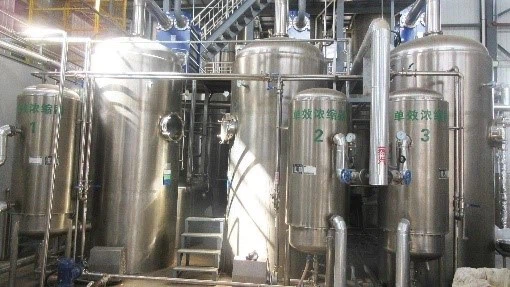
Concentration Tank
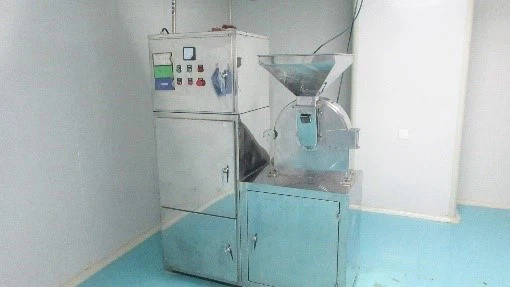
Crusher

Mixer
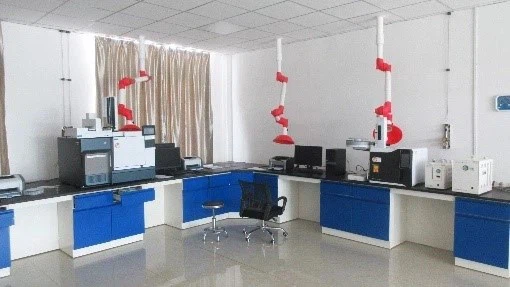
Inspection Room

Warehouse
our certificates
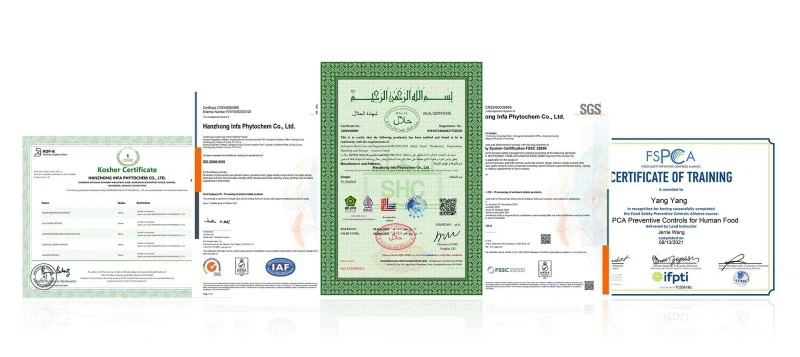
As an experienced and skilled manufacturer and supplier, we pledge to produce and offer our global customers superior herbal extracts (powder, oil, liquid, etc.) that are safe and have a high bioavailability. Due to our several international certifications, including ISO, FSSC, FDA, Kosher, Halal, FSMA, and others, we can ensure that the final herbal extracts we sell adhere to strict standards and regulations regarding potency, quality, and purity.
Because of our complete compliance with the aforementioned international certifications, our clients worldwide can be certain of the safety, effectiveness, and high bioavailability of the herbal extracts we offer. When clients seek to collaborate with an outstanding and dependable provider of premium herbal extracts, our commitment to the aforementioned certifications offers them peace of mind.
Preparations


customer feedback
Customer Feedback
every detail you need to know
Q1: What is the typical dosage for Berberine HCL Powder?
A: A common dosage in studies is 500 mg, taken two to three times per day with meals (totaling 1000-1500 mg daily). Because powder can be difficult to measure accurately, it is crucial to use a precise milligram scale. Always start with a lower dose to assess tolerance and consult with a healthcare professional for personalized advice.
Q2: When is the best time to take Berberine HCL?
A: The most effective time to take Berberine HCL is with meals or shortly before a meal. Taking it with food helps utilize its blood sugar-modulating effects directly after a meal and can also reduce the risk of minor digestive discomfort.
Q3: What are the common side effects?
A: The most common side effects may include: gas, bloating, or abdominal discomfort; diarrhea or constipation. These effects are often temporary and may subside as your body adjusts. Starting with a low dose can help minimize them.
Q4: How long does it take for Berberine HCL to show results?
A: While some subjective feelings of well-being may be noticed sooner, most of the researched benefits on blood sugar and cholesterol are typically observed over several weeks to a few months of consistent use.
Q5: Is Berberine a substitute for my diabetes medication?
A: NO. Absolutely not. Berberine is a supplement, not a replacement for prescribed medication. While it shows promising results, any changes to your diabetes management plan must be discussed with your healthcare provider. Self-treating and stopping medication can be extremely dangerous.
Q6: Why is the powder form different from capsules?
A: The primary difference is convenience and precision. 1)Powder: Allows for flexible dosing and is often more cost-effective per dose. However, it has a very bitter taste and requires careful measurement with a precision scale. 2)Capsules: Pre-dosed, tasteless, and portable. They are more convenient but usually cost more.
Q7: Is there a difference between Berberine HCL and other forms like Berberine Phytosome?
A: Yes, the main difference is bioavailability. Standard Berberine HCL has relatively low absorption. 1. Berberine HCL: The standard, cost-effective form. 2. Berberine Phytosome (e.g., Berberine+): Bound to a phospholipid to significantly enhance absorption, allowing for a lower dose. 3. Dihydroberberine: A semi-synthetic, enhanced form that is also more bioavailable and may have a gentler impact on the gut. The enhanced forms are often more expensive but can be worth it for those who experience digestive issues with the HCL form or want maximum efficacy from a smaller dose.
you can find us here
Inquire via any of the following ways, and our sales team stands ready to assist you.
Shaanxi Inhealth Nature Industry Co., Ltd.
Tel: +86-29-88387688
Mobile/WhatsApp: +86 18709243507
Email: April@inhealthnature.com
Hot Tags: berberine hydrochloride powder, China berberine hydrochloride powder manufacturers, suppliers, factory, rhodiola standardized extract, natural soybean germ extract manufacturer, avena sativa bran extract, kudzu root extract manufacturers, lemon balm extract, devil s claw standardized extract


Send Inquiry
