

What are the Applications of NMN Powder in Dietary Supplements?
Mar 06, 2026
The September 2025 decision by the U.S. FDA to officially legalize NMN powder in dietary supplements has catalyzed a major market transformation. This regulatory clarity has eliminated uncertainty, opening doors for mainstream markets and boosting consumer confidence. The demand for high-quality Bulk NMN Powder has surged as manufacturers race to formulate compliant, innovative products for the expanding anti-aging and longevity market.
What are the advantages of NMN Powder v.s. NMN Capsules?
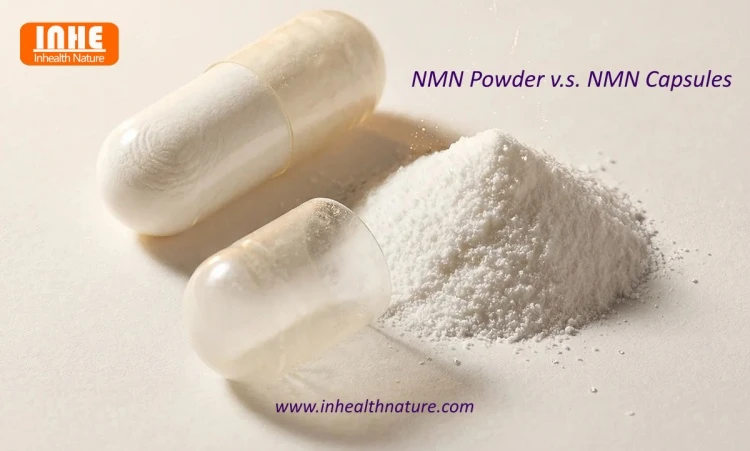
The choice between NMN powder and capsules largely depends on your personal priorities regarding cost, convenience, and how you prefer to manage your supplementation. Powder generally offers better value and flexibility, while capsules provide unmatched simplicity and portability. Here is a detailed comparison of NMN powder versus capsules.
1. Cost and Cost-Effectiveness
Powder is the clear winner in terms of cost-efficiency. Since it requires less processing and packaging, the cost per gram is much lower, making it ideal for budget-conscious users over the long term or those who require large daily amounts. Capsules are relatively more expensive, including the cost of the capsule shell, but the price per capsule is usually fixed, making budget control easier.
2. Dosage Flexibility (Adjustability)
Powder offers maximum flexibility, allowing you to easily measure and adjust your dose precisely from a small "starter" amount to a higher therapeutic dose and to titrate up or down as needed. Capsules offer fixed, pre-measured doses, which is very convenient but makes fine-tuning your intake difficult.
3. Absorption Speed
In a standard comparison, powder may have a slight edge in speed. When mixed with water, it's already dissolved and ready for absorption, whereas capsules must first break down in the stomach. The scientific consensus is that both forms are quickly absorbed (within minutes) and result in comparable overall increases in NAD+, since the body has a specific transporter for NMN in the intestines. For potentially faster absorption, powder can also be taken sublingually (held under the tongue), allowing it to bypass the digestive system entirely.
4. Portability
Capsules are the undisputed champion for portability. They are easy to carry, discreet, and require no preparation; you can take them anytime, anywhere. Powder is less convenient for travel or on-the-go use, as it requires you to carry the container, a scoop, and something to mix it with.
5. Taste and Experience
Capsules offer significant advantages. The capsule shell isolates the taste, making them tasteless and easy to swallow, suitable for people with sensitive palates. Powders typically have a slightly sour or bitter taste, making them unpleasant to take directly and requiring mixing with fruit juice or yogurt to mask the flavor.
Summary Table: NMN Powder vs. Capsules
|
Feature |
NMN Powder |
NMN Capsules |
|
Cost-Effectiveness |
Excellent. Lower cost per gram; best for long-term or high-dose use. |
Good. Convenience comes at a premium price. |
|
Dosage Flexibility |
High. Dose can be precisely customized and adjusted. |
Low. Always have fixed, pre-measured doses. |
|
Absorption Speed |
Potentially Faster. Can be taken sublingually to bypass digestion. Both forms are absorbed rapidly when swallowed. |
Standard. It must dissolve in the stomach first, but overall efficacy is similar to the powder. |
|
Portability |
Low. Requires preparation and is messy for travel. |
Excellent. Easy to carry, discreet, and convenient. |
|
Taste & Experience |
Noticeable Taste. Often described as bitter and acidic, but can be masked with food/drink. |
Tasteless. Provides a simple, no-fuss experience, ideal for those who dislike the taste. |
Why does bulk density affect the flowability of NMN powder?
The Concept of Bulk Density
Bulk density refers to the mass of a powder divided by the overall volume it occupies. This overall volume accounts for both the solid particles and the empty spaces (or air gaps) between them. The bulk density of NMN powder (usually measured in g/ml) refers to how much powder can be packed into a specific space, such as a capsule or packaging container.
Why Bulk Density Affects Flowability
The relationship between bulk density and flowability is determined by the physical interactions between powder particles. Here's how it works:
a. Low Bulk Density (Fluffy Powders): Powders with low bulk density have many empty spaces and exhibit high porosity. They typically have a large surface area and experience strong inter-particle forces, including van der Waals and electrostatic forces. These forces lead the particles to adhere to each other, resulting in a cohesive powder. When particles are cohesive, they tend to clump and resist movement relative to one another, resulting in poor flow.
b. High Bulk Density (Dense Powders): Powders that have a higher bulk density consist of particles packed tightly with very little space between them. This often means the particles are larger, uniform, or have been properly processed (such as by granulation or crystallization) to remove surface irregularities and decrease stickiness. In such cases, gravity plays a stronger role than the forces holding particles together. This enables them to move past each other easily, resulting in a smooth, consistent flow.
In essence, a low bulk density often signifies a "fluffy," cohesive powder that resists flow, while a high bulk density typically signifies a "dense," free-flowing powder.
Impact on Production
The flowability of NMN powder, dictated by its bulk density, has a profound impact on the manufacturing of supplements like capsules and tablets.
a. Filling Consistency and Weight Accuracy: This is the most critical issue. If NMN powder has poor flowability (often due to low bulk density), it will not flow evenly into the dies of a capsule filling machine. This results in significant variations in content and weight between capsules, which leads to inconsistent product quality. Manufacturers may find that they can only fill 200 mg of a low-density NMN into a capsule meant to hold 350 mg, which is inefficient and impractical for providing the intended dose.
b. Production Efficiency: Powders with poor flowability can clog hoppers, bridges over machine inlets, and require frequent intervention to keep the production line running. This leads to downtime, wasted materials, and increased manufacturing costs.
c. Packaging and Storage: A low bulk density powder is "fluffy" and occupies a larger volume for the same weight. This means you need bigger packaging, more storage space, and higher shipping costs. A high bulk density is desirable as it can significantly reduce these costs.
Inhealth Nature's Crystallization Technology for NMN Powder
The advantages of our NMN powder with a bulk density of 0.52 g/ml would be significant:
A. For Manufacturers:
a. Flawless Production: The high flowability ensures smooth, continuous operation of capsule filling and tableting machines, maximizing production efficiency.
b. Precise Dosing: It solves the "larger content/weight difference" problem, ensuring that every single capsule or tablet contains the exact labeled amount of NMN, which is crucial for product quality and regulatory compliance.
c. Efficient Capsule Filling: A density of 0.52 g/ml allows for a higher fill weight per capsule. For example, it makes it feasible to fill a "000" size capsule with a substantial 500 mg dose, meeting consumer demand for potent, convenient supplements.
d. Lower Logistics Costs: The denser powder requires smaller packaging and less storage space, reducing costs throughout the supply chain.
B. For the End Consumer:
a. Reliable Potency: The consumer can trust that each dose delivers the promised amount of NMN, ensuring consistent results.
b. Smaller Capsules: For a given dose, high-density powder allows for a smaller capsule size, making the supplement easier to swallow.

What are the regulations in various countries regarding the use of NMN powder in dietary supplements?
United States (FDA)
As of the end of December 2025, the U.S. Food and Drug Administration (FDA) has confirmed that Nicotinamide Mononucleotide (NMN) can be lawfully marketed as a dietary supplement. This marks a significant reversal of its position from 2022.
a. Regulatory Status: Legal as a dietary supplement.
b. Key Development: In late September 2025, the FDA reversed its previous determination that NMN was excluded from the dietary supplement definition due to its prior investigation as a drug. This decision was formalized in letters sent to manufacturers in December 2025, reinstating successful New Dietary Ingredient Notifications (NDINs). The agency revised its interpretation of the "drug preclusion" clause, concluding that NMN was marketed as a supplement in the U.S. as early as 2017, before it was authorized for investigation as a drug.
China (NMPA)
By the end of December 2025, NMN has not received approval from China's National Medical Products Administration (NMPA) or the State Administration for Market Regulation as a food additive, health supplement, or medication.
a. Current Status: Not approved as a dietary supplement.
b. Positive Signals: While not yet legal for oral consumption, the regulatory environment is showing signs of progress. In 2022, NMN was approved as a new cosmetic ingredient. More significantly, in April 2025, NMN was added to the list of health food applications under review by the State Administration for Market Regulation.
European Union (EFSA)
As of the end of December 2025, NMN has not yet been authorized for use in dietary supplements within the EU. It is currently under review by the European Food Safety Authority (EFSA) as a Novel Food.
a. Regulatory Status: Under review (Not yet authorized).
b. Current Process: In July 2025, the EFSA initiated a public consultation on a Novel Food application to authorize NMN. The application proposes that NMN be used as a dietary supplement for adults, with a maximum daily intake of 500 mg. While the public consultation closed in August 2025, a final scientific opinion from EFSA and subsequent authorization by the European Commission are not expected until at least 2026.
Australia (TGA)
Just before the December 2025 deadline, Australia's Therapeutic Goods Administration (TGA) approved NMN for use in dietary supplements, marking a major regulatory shift.
a. Regulatory Status: Approved for use in listed medicines (dietary supplements).
b. Key Development: On December 10, 2025, NMN was added to the TGA's Permissible Ingredients Determination. This allows Australian manufacturers to formulate NMN into supplements for sale within the country. Before this approval, NMN supplements could be manufactured in Australia but only for export. This followed a multi-year process requiring a comprehensive safety and quality review.
Summary Table
|
Country / Region |
Regulatory Body |
Status (as of Dec 2025) |
Key Conditions & Notes |
|
United States |
FDA |
Legal (Dietary Supplement) |
Reinstated in late 2025. Permitted via the NDI pathway with safety notifications. |
|
China |
NMPA |
NOT Permitted (for Food) |
Banned for oral consumption/food use. |
|
European Union |
EFSA |
NOT Authorized (Novel Food) |
Pending safety assessment as a Novel Food; multiple applications under evaluation. |
|
Australia |
TGA |
Legal (Therapeutic Good) |
Approved as a complementary medicine ingredient with exclusive license, strict dosage (≤500mg/day), and GMP quality requirements. |
How do different production processes affect the final product quality of NMN powder?
Chemical Synthesis v.s. Enzymatic Synthesis
|
Production Process |
Chemical Synthesis |
Enzymatic Synthesis |
|
Core Principles |
Constructs the NMN molecule through multi-step chemical reactions using organic solvents, high temperatures, and metal catalysts to force the linkage of nicotinamide and ribose components. |
Mimics the body's natural biosynthesis pathway. Uses specific, purified enzymes (e.g., nicotinamide phosphoribosyltransferase) as biocatalysts under mild, aqueous conditions to assemble NMN with high precision. |
|
Purity & Impurities |
Lower Purity & Higher Impurities: Prone to residual organic solvents, heavy metal catalysts, and other reaction by-products. It produces a mix of α and β isomers, requiring complex purification to isolate the active β form. |
High Purity (≥99%): The high substrate specificity of enzymes means they produce almost exclusively the desired β-NMN isomer with minimal by-products. This results in exceptionally high purity without harmful chemical residues. |
|
Bioactivity |
Potentially Compromised: If the final product contains a significant proportion of the α-isomer (which is not biologically active), the overall bioactivity per gram is reduced. Harsh conditions can also potentially degrade the molecule. |
Fully Bioactive: Enzymes are stereospecific, meaning they naturally produce only the biologically active β form of NMN. This ensures the product is fully effective as a precursor to NAD+ in the human body. |
|
Safety |
Higher Risk Profile: The presence of residual solvents and heavy metals poses potential toxicity risks, necessitating rigorous purification and quality control to ensure consumer safety. |
Excellent Safety Profile: The process uses mild, non-toxic conditions and food-grade reagents. The absence of organic solvents and heavy metals results in a product that is safe for human consumption, aligning with "green chemistry" principles. |
|
Physical Properties (Flowability) |
Can vary significantly depending on the final crystallization and purification steps. Inconsistent processes may lead to powders with poor flow characteristics, which can be problematic during encapsulation or formulation. |
Typically produces a fine, consistent crystalline powder. Modern enzymatic processes can be optimized to yield particles with excellent flowability, ensuring smooth handling in manufacturing and accurate dosing in capsules or tablets. |
|
Cost & Environmental Friendliness |
Less Environmentally Friendly: Generates substantial toxic waste, uses harsh chemicals, and is energy-intensive. While potentially cheaper at a very small scale, the costs of waste treatment and purification add up. |
Sustainable & Cost-Effective: Considered a "green" process with minimal waste, lower energy consumption, and the use of renewable resources. Advances in enzyme engineering have made it highly efficient and scalable, offering a competitive cost advantage for high-quality production. |
The Inhealth Nature Advantage
Inhealth Nature's commitment to using advanced enzymatic synthesis for its NMN powder directly translates to a superior final product. By choosing this method, Inhealth Nature ensures its customers receive NMN bulk powder that is:
a. Naturally Bio-Identical: The enzymatic process creates NMN powder that is structurally identical to the NMN found naturally in the body, ensuring optimal recognition and utilization at the cellular level.
b. Exceptionally Pure and Safe: Free from the contaminants associated with chemical synthesis (solvents, heavy metals), Inhealth Nature's NMN powder meets the highest standards for safety and purity, which is crucial for long-term supplementation.
c. Fully Potent and Effective: Because the process is stereospecific, every milligram of powder is the active β-NMN, guaranteeing consistent potency and reliable efficacy in boosting NAD+ levels.
d. Manufactured Responsibly: The environmentally friendly nature of enzymatic synthesis aligns with sustainable manufacturing practices, reducing the ecological footprint of production while delivering a premium ingredient.

What are the synergistic effects when NMN powder is combined with PQQ and resveratrol?
NMN + PQQ: Targeting Cellular Energy from Two Angles
This combination is considered highly synergistic because it supports cellular energy production through two different but complementary methods.
a. NMN's Role (The Energy Provider): NMN serves as a direct precursor to Nicotinamide Adenine Dinucleotide (NAD+), an essential coenzyme in every cell. NAD+ plays a vital role in energy metabolism by accepting electrons during metabolic processes such as glycolysis and the Krebs cycle, which are key to generating cellular energy (ATP). As we age, NAD+ levels decrease, resulting in reduced cellular energy production.
b. PQQ's Role (The Mitochondria Builder): PQQ exerts its primary anti-aging effect by enhancing mitochondrial biogenesis-the process by which cells create new mitochondria. Mitochondria are the power plants of the cell, responsible for generating most of the cell's supply of ATP. PQQ also acts as a potent antioxidant and can modulate inflammatory pathways.
c. The Synergy: By combining NMN and PQQ, you are not only providing the cell with more of the key molecule (NAD+) needed for energy production but also increasing the number of mitochondria available to produce that energy. This dual action can lead to significantly enhanced cell vitality, improved energy metabolism, and better overall cellular function, helping to relieve fatigue and maintain a better mental state.
NMN + Resveratrol: Fueling the Longevity Pathway
The synergy between NMN and resveratrol is centered on the activation of sirtuins, a family of proteins often called longevity genes.
a. NMN's Role (The Fuel): As mentioned, NMN boosts levels of NAD+. NAD+ is not just an energy coenzyme; it is also the essential fuel or substrate for sirtuins, particularly SIRT1. Without sufficient NAD+, sirtuins cannot function, regardless of how many activators are present.
b. Resveratrol's Role (The Activator): Resveratrol is a polyphenolic compound that acts as a small-molecule SIRT1 activator (STAC). It binds to SIRT1 and increases its activity. SIRT1, once activated, deacetylates target proteins involved in various cellular processes, including stress resistance, DNA repair, metabolism, and inflammation.
c. The Synergy: NMN provides the fuel (NAD+), and resveratrol turns on the engine (SIRT1) that consumes that fuel to drive cellular repair and maintenance pathways. A study cited on a commercial product page suggests that resveratrol can activate the NMNAT1 convertase, which promotes the conversion of NMN into NAD+, potentially further amplifying the effect. This combined action is thought to enhance cellular repair capability and protect against age-related physiological decline.
NMN + PQQ + Resveratrol: A Multi-Targeted Approach to Healthy Aging
Combining all three ingredients creates a comprehensive, multi-faceted strategy for promoting cellular health and longevity.
a. NMN elevates cellular NAD+ levels, supporting energy production and providing fuel for sirtuins.
b. PQQ stimulates the growth of new, healthy mitochondria, increasing the cell's capacity for energy production.
c. Resveratrol activates the SIRT1 longevity pathway, which uses NAD+ to initiate cellular repair and defense mechanisms.
d. The Synergistic Outcome: This combination targets mitochondrial dysfunction (via PQQ), NAD+ depletion (via NMN), and deregulated nutrient sensing/epigenetic alterations (via resveratrol-activated sirtuins). The result is a powerful formulation designed to protect cells, improve body functions, and support healthy aging from multiple angles.
As the global leader in enzymatic production, Inhealth Nature provides the highest purity Bulk NMN Powder to meet this surging demand. Our excellent ingredient ensures your products stand out in a competitive market. Ready to elevate your supplement quality? Partner with us today. For all inquiries and to discuss your wholesale needs, contact us at kathy@inhealthnature.com.


