

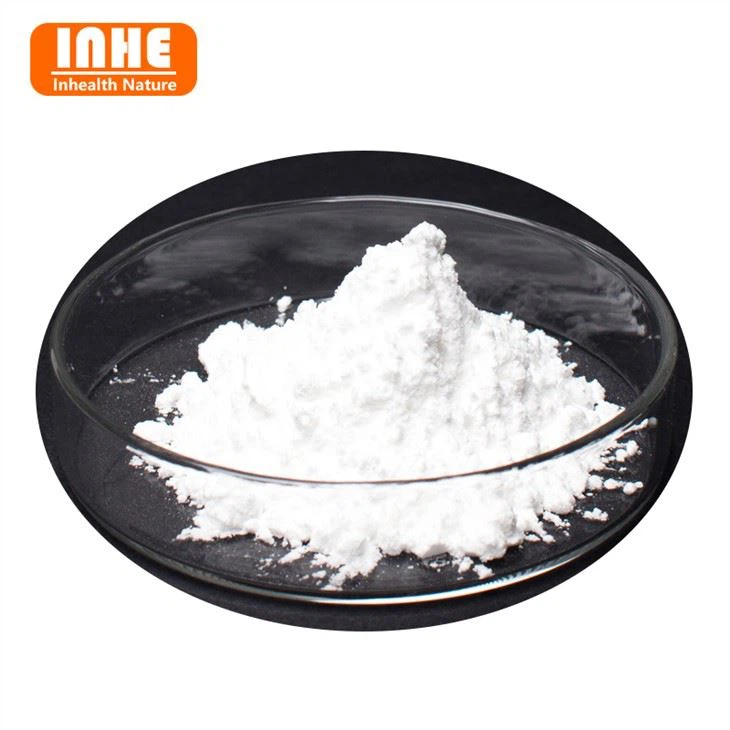
Palmitoylethanolamide PEA Powder
CAS No.: 544-31-0
Molecular formula: C18H37NO2
Purity (HPLC): NLT 98%
Appearance: White crystal powder
Origin: China
Test method: HPLC
Package: 1kg/bag, 5kg/bag, 25kg/drum
Lead time: 5 days after payment
Storage: Store in the original tightly closed package from moisture and sunlight
Certificate: ISO, Kosher, Halal, FDA, FSMA, BRC
Shaanxi Inhealth Nature Industry Co., Ltd. is one of the most experienced manufacturers and suppliers of palmitoylethanolamide pea powder in China, featured by quality products and good price. Welcome to wholesale bulk high-grade palmitoylethanolamide pea powder from our factory. Contact us for free sample.
Natural Anti-inflammatory Agent: PEA Powder
Palmitoylethanolamide PEA Powder offers a promising natural approach to managing pain and inflammation. Palmitoylethanolamide (PEA) is a naturally occurring fatty acid amide that belongs to the group of endogenous lipid signaling molecules known as N-acylethanolamines. It has gained significant attention in recent years for its potential therapeutic properties. PEA is known for its anti-inflammatory and analgesic effects. It exerts these effects by acting on several molecular targets, including the peroxisome proliferator-activated receptor-alpha (PPAR-α), which is involved in regulating inflammation and pain. PEA has also been shown to interact with other receptors and channels, such as transient receptor potential vanilloid type-1 (TRPV1), which plays a role in pain perception. Its anti-inflammatory and analgesic properties, along with its favorable safety profile, make it an attractive option for individuals seeking alternative or adjunctive therapies for chronic pain and inflammatory conditions. As research continues to uncover the potential benefits of PEA, it holds great promise as a therapeutic tool in various fields of medicine. The powdered form of PEA offers several advantages for ease of use and convenience. It can be easily mixed with water or other liquids, making it suitable for oral consumption. Additionally, the powder form allows for precise dosing, ensuring accurate administration and consistent results.

How to Effectively Maintain the Stability of PEA Powder?
When considering the use of PEA powder as a dietary supplement or in various formulations, understanding its stability is essential to ensure the effectiveness and quality of the product.
★ Temperature
One aspect of stability to consider is temperature. PEA powder is generally stable at room temperature, but it should be stored in a cool, dry place away from direct sunlight and heat sources. Exposure to high temperatures can lead to degradation and loss of potency. Therefore, it is recommended to store PEA powder in a tightly sealed container to protect it from environmental factors that may compromise its stability.
★ Humidity
Humidity is another factor that can impact the stability of PEA powder. Moisture can cause the powder to clump or become sticky, thereby affecting its solubility and consistency. To maintain its stability, it is important to keep the powder dry and sealed tightly. If the powder does become clumped, gentle agitation or crushing can help restore its uniformity.
★ Shelf Life
The shelf life of PEA powder is also an important consideration. While there is no universal expiration date for PEA powder, it is typically recommended to use it within two years from the manufacturing date. Over time, the potency and effectiveness of the powder may decrease due to natural degradation processes. Regularly checking the expiration date and using the powder within the recommended timeframe ensures optimal results.
★ Air and Light
Additionally, exposure to air and light can also impact the stability of PEA powder. Oxygen and light exposure can lead to oxidation and degradation of the compound. Therefore, it is important to keep the container tightly closed when not in use and store it in a dark place or an opaque container to protect it from light.
Specification Sheet
ITEM | SPECIFICATION | RESULT |
Organoleptic | ||
Appearance | White crystal powder | Conform |
Purity: (by HPLC) | ||
PEA | ≥99.0% | 99.48% |
Physical and Chemical | ||
Water content | <1.0% | 0.16% |
Loss on Drying | <1.0% | 0.27% |
Residue on ignition | <0.1% | 0.04% |
Contaminants | ||
Arsenic (As) | <0.15 ppm | Conform |
Cadmium (Cd) | <2.5 ppm | Conform |
Lead (Pb) | <0.5 ppm | Conform |
Mercury (Hg) | <1.5 ppm | Conform |
Ethanol | <0.5% | Conform |
Methanol | <0.3% | Conform |
Microbiological | ||
Total microbial count | <1000cfu/g | 100cfu/g |
Coliform | Negative | Negative |
Remarkable Health Benefits
Palmitoylethanolamide PEA powder has gained prominent attention in recent years for its remarkable health benefits. Extensive research has been conducted to explore the various therapeutic properties of PEA, making it a promising compound in the field of healthcare.
★ Anti-inflammatory Effects
One of the key health benefits associated with PEA powder is its anti-inflammatory effect. PEA has been shown to modulate inflammatory processes by interacting with receptors involved in the regulation of immune responses. By reducing inflammation, PEA may help alleviate symptoms associated with chronic inflammatory conditions such as arthritis, asthma, and inflammatory bowel disease.
★ Analgesic Properties
PEA powder also exhibits analgesic properties, making it potentially beneficial in managing different types of pain. Studies have demonstrated that PEA can inhibit the activation of pain receptors and decrease the release of inflammatory mediators, effectively reducing pain signals. This makes PEA an attractive option for individuals dealing with chronic pain, including neuropathic pain and pain associated with conditions like fibromyalgia and multiple sclerosis.
★ Neuroprotective Effects
PEA powder has been found to possess neuroprotective effects. It plays a role in supporting the health and function of nerve cells, potentially providing benefits for neurological disorders. Research suggests that PEA may have a positive impact on conditions such as Alzheimer's disease, Parkinson's disease, and stroke.
★ Mood Enhancer
In addition to its anti-inflammatory and analgesic properties, PEA powder has shown promise as a potential mood enhancer. Some studies have indicated that PEA may have antidepressant and anxiolytic effects, possibly through its interaction with neurotransmitters involved in mood regulation. By helping to balance neurotransmitter levels, PEA may contribute to improved mental well-being and emotional stability.
★ Support the Immune System
Moreover, PEA powder has been investigated for its role in supporting immune function. It has been shown to modulate the immune response by regulating the production of pro-inflammatory cytokines. This immunomodulatory effect suggests that PEA may have potential applications in managing immune-related conditions such as allergies and autoimmune diseases.

How Can We Get High-grade PEA Powder?
The extraction process is crucial in obtaining high-quality PEA powder with optimal purity and potency. In this part, we will explore the extraction process of PEA and the key factors involved in ensuring its effectiveness.
★ Source Selection
PEA can be extracted from different sources, including soybeans, egg yolks, and peanuts. The choice of source depends on factors such as availability, cost, and desired purity. It is important to select a source free from contaminants and potential allergens to ensure the safety of the final product.
★ Pre-Treatment
Before extraction, the selected source material undergoes pre-treatment to enhance the efficiency of the extraction process. This may involve grinding or milling the material into a fine powder to increase the surface area for better extraction.
★ Solvent Selection
The choice of solvent is crucial in extracting PEA effectively. Common solvents used include ethanol and methanol. The solvent should have a high affinity for PEA and the ability to selectively dissolve it while leaving behind unwanted impurities.
★ Extraction Method
There are several extraction methods available for PEA extraction, including solid-liquid extraction, liquid-liquid extraction, and supercritical fluid extraction. Each method has its advantages and disadvantages, and the selection depends on factors such as efficiency, cost, and environmental impact.
a. Solid-Liquid Extraction: this method involves soaking the pre-treated source material in the chosen solvent. The solvent extracts the PEA from the source material, forming a solution. The extract is then filtered to remove any solid particles before further processing.
b. Liquid-Liquid Extraction: In this method, the PEA-containing solvent solution obtained from solid-liquid extraction is mixed with another solvent that has a higher affinity for PEA. The PEA selectively transfers to the new solvent, while other impurities remain in the original solvent. This separation process is repeated until a highly pure PEA solution is obtained.
c. Supercritical Fluid Extraction: Supercritical fluid extraction utilizes a supercritical fluid, typically carbon dioxide (CO2), as the solvent. Under specific temperature and pressure conditions, CO2 behaves like both a gas and a liquid, making it an efficient solvent for extracting PEA. It is a clean and environmentally friendly extraction method, leaving no residual solvents.
★ Purification
After the extraction process, the PEA extract may still contain impurities such as lipids, pigments, and other substances. Purification techniques, such as chromatography or filtration, are employed to remove these impurities and obtain a purified PEA solution.
★ Drying and Powdering
The final step involves drying the purified PEA solution to remove any remaining traces of solvents. This can be achieved through techniques such as spray drying or freeze drying. The dried PEA is then processed into a powder form by grinding or micronization, ensuring uniform particle size and enhanced stability.
During the entire extraction process, quality control measures should be implemented to ensure the purity and potency of the extracted PEA. These measures include testing for contaminants, residual solvents, and microbial activity, and verifying the PEA content using analytical techniques such as high-performance liquid chromatography (HPLC).

Our Certificates
We are a sophisticated manufacturer applying ourselves to providing superior and excellent plant extracts (oil, powder, etc.) that are safe and potent for our clients. We have got diverse international certifications, including ISO, FDA, Kosher, Halal, FSMA, and BRC, which guarantee the potency, purity, and quality of our plant extracts.
We comply with the requirements and specifications of the above-mentioned international certifications, therefore guaranteeing that the plant extracts we produce are of superior quality and safe and effective for use by our clients around the world. Our dedication to these certifications also provides comfort to our clients who desire to cooperate with a reliable and reputable supplier of healthy and extraordinary plant extracts.
We carry out a series of stringent and precise practices throughout our production process to ensure our plant extracts meet these stringent requirements. Every step of the process manifests our dedication to the potency, purity, and quality of our plant extracts, from sourcing raw materials from reliable suppliers to investing in advanced production equipment.

Our Packaging

PEA Applications
Palmitoylethanolamide PEA powder is a naturally occurring compound that has gained extraordinary attention for its potential health benefits. Due to its versatile properties, PEA powder finds applications in multiple industries, including pharmaceuticals, cosmetics, and food. Let’s take a close look at the diverse uses of PEA powder in these industries.
★ Pharmaceutical Industry
PEA powder has shown promise in the pharmaceutical field due to its anti-inflammatory, analgesic, and neuroprotective properties. It is widely studied for its potential therapeutic effects on chronic pain conditions, such as neuropathic pain and fibromyalgia. PEA powder acts by selectively targeting endogenous cannabinoid receptors, reducing inflammation and modulating pain signals. Additionally, PEA powder has shown potential in managing allergies, asthma, and multiple sclerosis. Ongoing research suggests that PEA powder may have a wide range of applications in treating various inflammatory and autoimmune conditions.
★ Cosmetics Industry
In the cosmetics industry, PEA powder is valued for its skin-soothing and anti-aging properties. It is often incorporated into skincare products, creams, and lotions to provide relief from skin redness, irritation, and itching. PEA powder helps maintain skin homeostasis by regulating cellular responses to inflammatory stimuli, thus promoting a healthy and balanced complexion. Its soothing effects make it suitable for sensitive skin and conditions like eczema and rosacea. Furthermore, PEA powder's antioxidant properties contribute to its anti-aging benefits, helping to protect the skin against oxidative stress and reducing the appearance of wrinkles and fine lines.
★ Food Industry
PEA powder has potential applications in the food industry due to its nutraceutical properties. It can be used as a dietary supplement or functional ingredient in various food products. PEA powder's anti-inflammatory and neuroprotective effects make it an interesting addition to products targeting brain health and cognitive function. Additionally, its potential role in managing allergies and immune-related disorders may lead to the development of specialty foods for individuals with specific dietary needs.
If you are deeply impressed with our PEA powder or other products, please do not hesitate to contact us at kathy@inhealthnature.com.
Hot Tags: palmitoylethanolamide pea powder, China palmitoylethanolamide pea powder manufacturers, suppliers, factory, capa monomer, Oleanolic Acid Powder, vitamin niacinamide b3 powder, griffonia seed extract supplier, vinyl chloride monomer, polyvinyl monomer


Send Inquiry
